
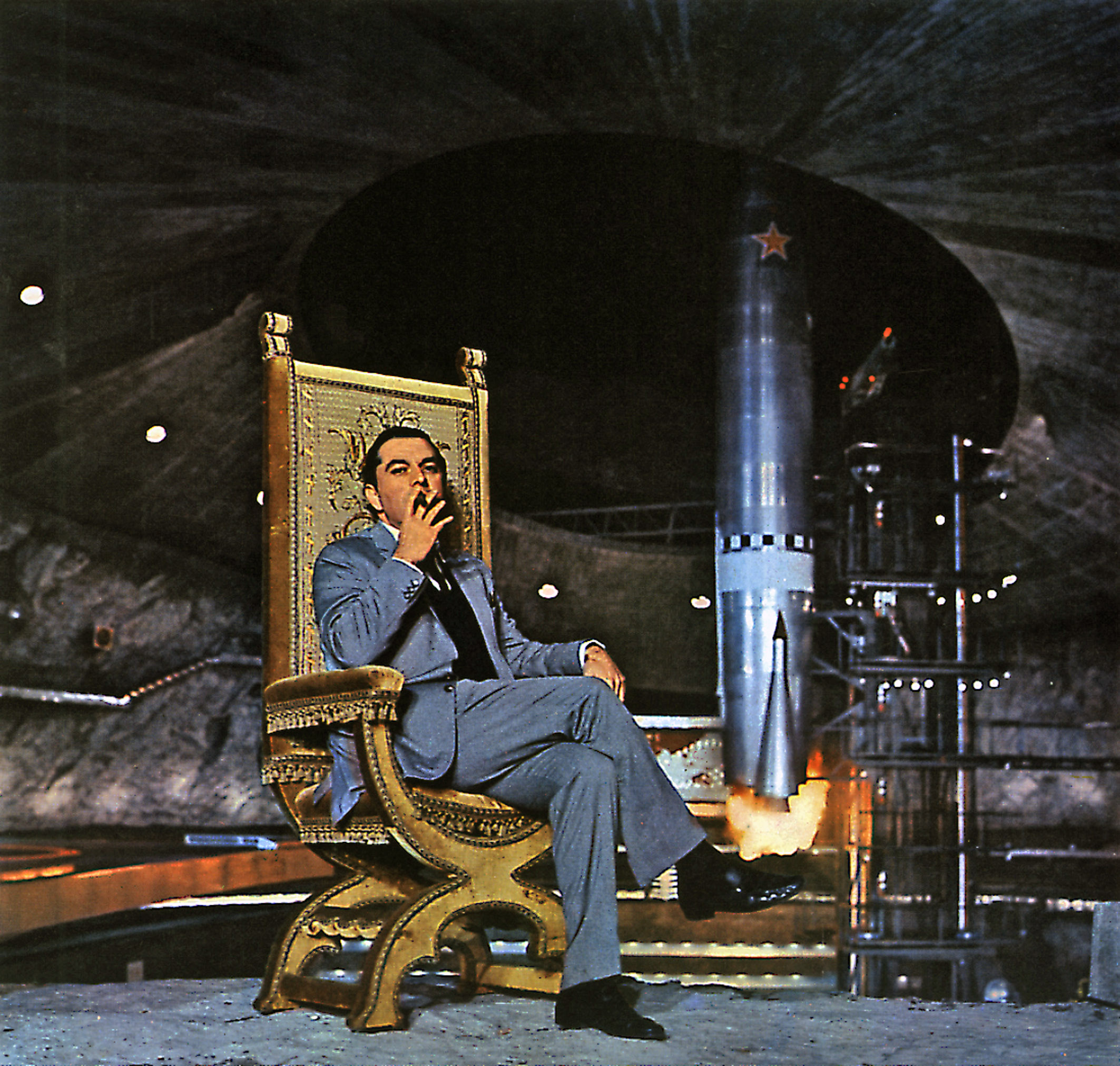
The recently announced six-figure bequest from the estate of legendary production designer Sir Ken Adam and his wife Lady Letizia Adam, pictured below, for The Northern School of Art’s BA (Hons) Set Design for Stage and Screen course will have a lasting impact on future students studying on the School’s well-regarded course.
-
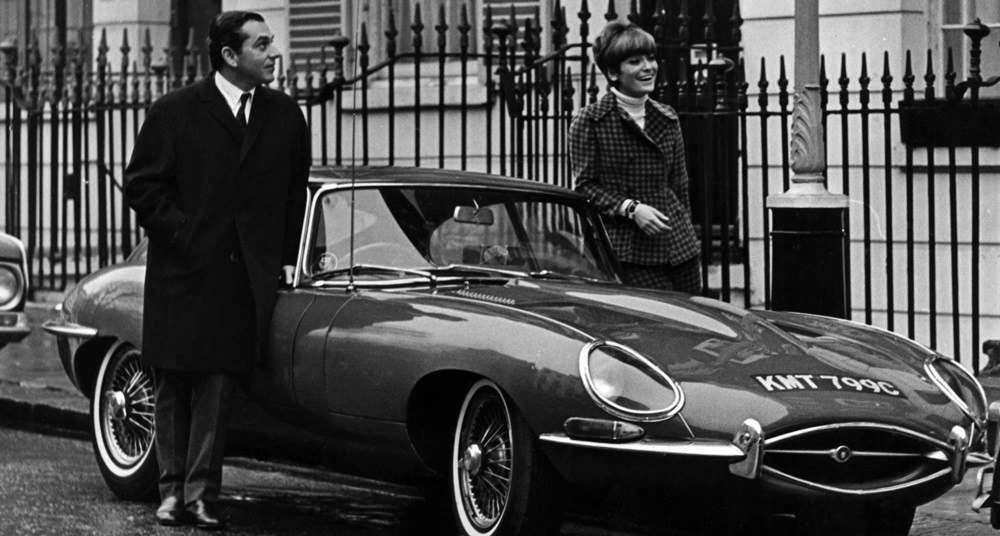
- Ken Adam and his wife Letitzia outside their London home in Knightsbridge in 1965
-
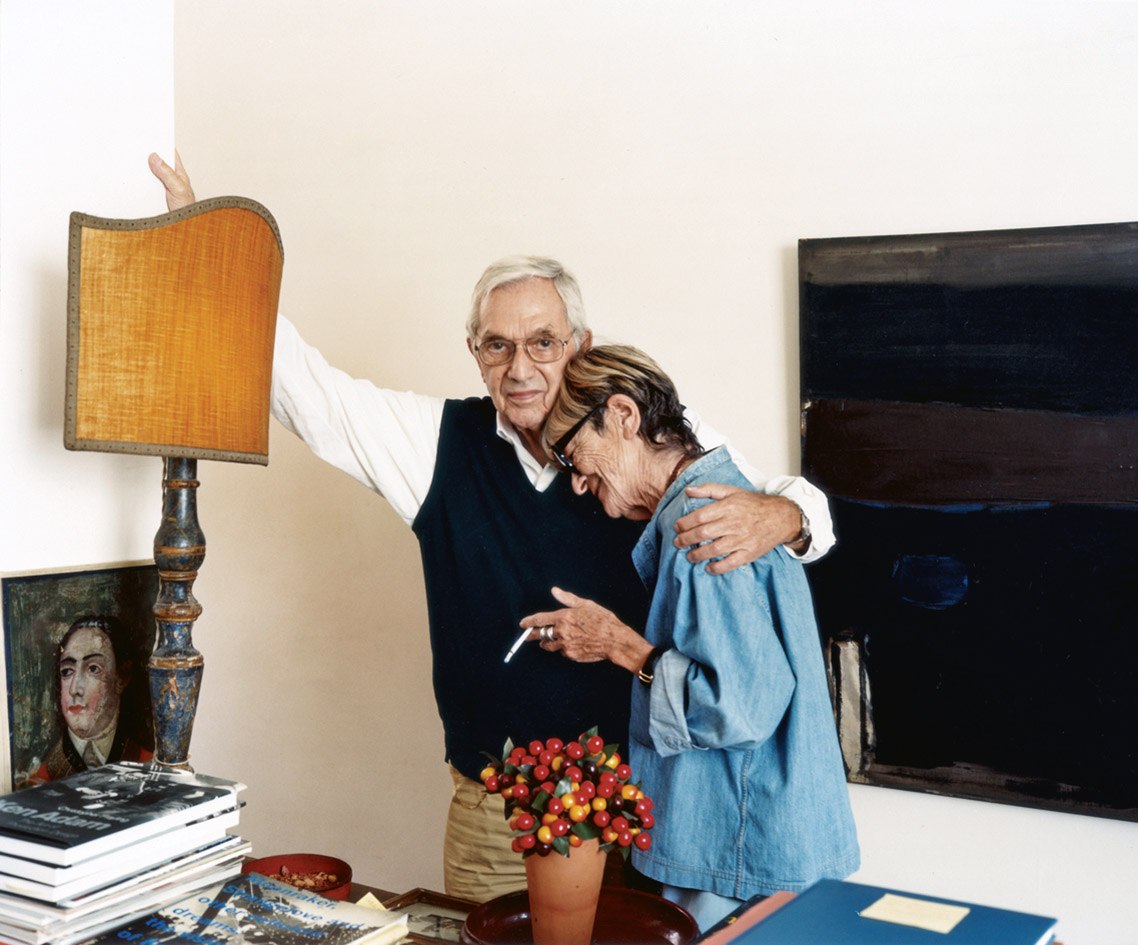
- Sir Ken & Lady Adam in their home in Montpelier Place, London
Described by Steven Spielberg as ‘the greatest visual artist in movie history’ Sir Ken Adam was most famous for designing James Bond films and Dr. Strangelove.
-
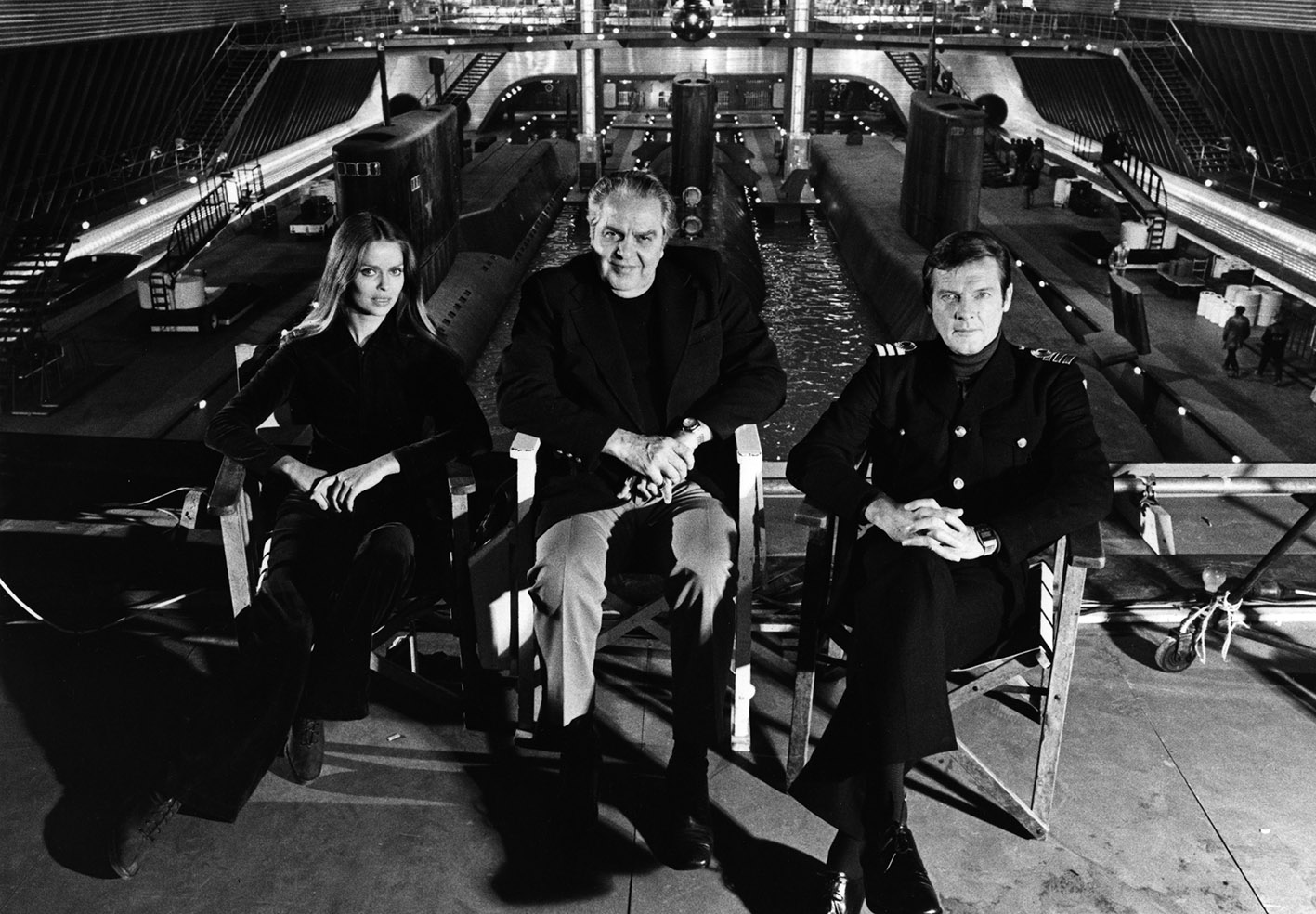
- (L-R) Bond Girl Barbara BachBond producer Albert R. ‘Cubby’ Broccoli and Roger Moore on Ken Adam’s Liparus Supertanker set
-
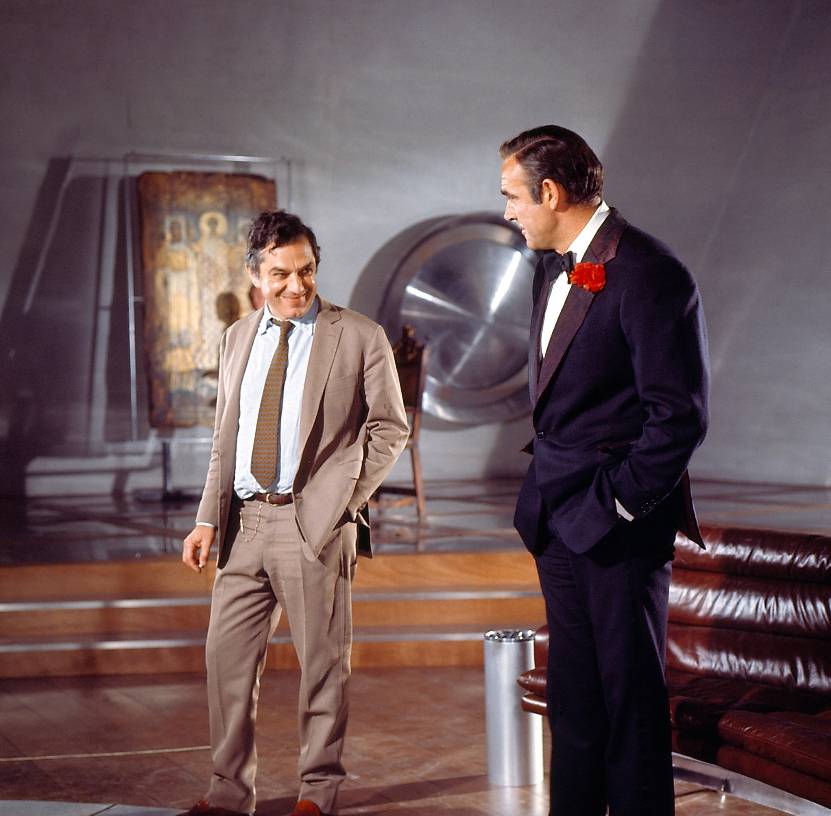
- Ken Adam jokes with Sean Connery on his set for Willard Whyte’s apartment suite in the seventh James Bond film, Diamonds Are Forever (1971)
-
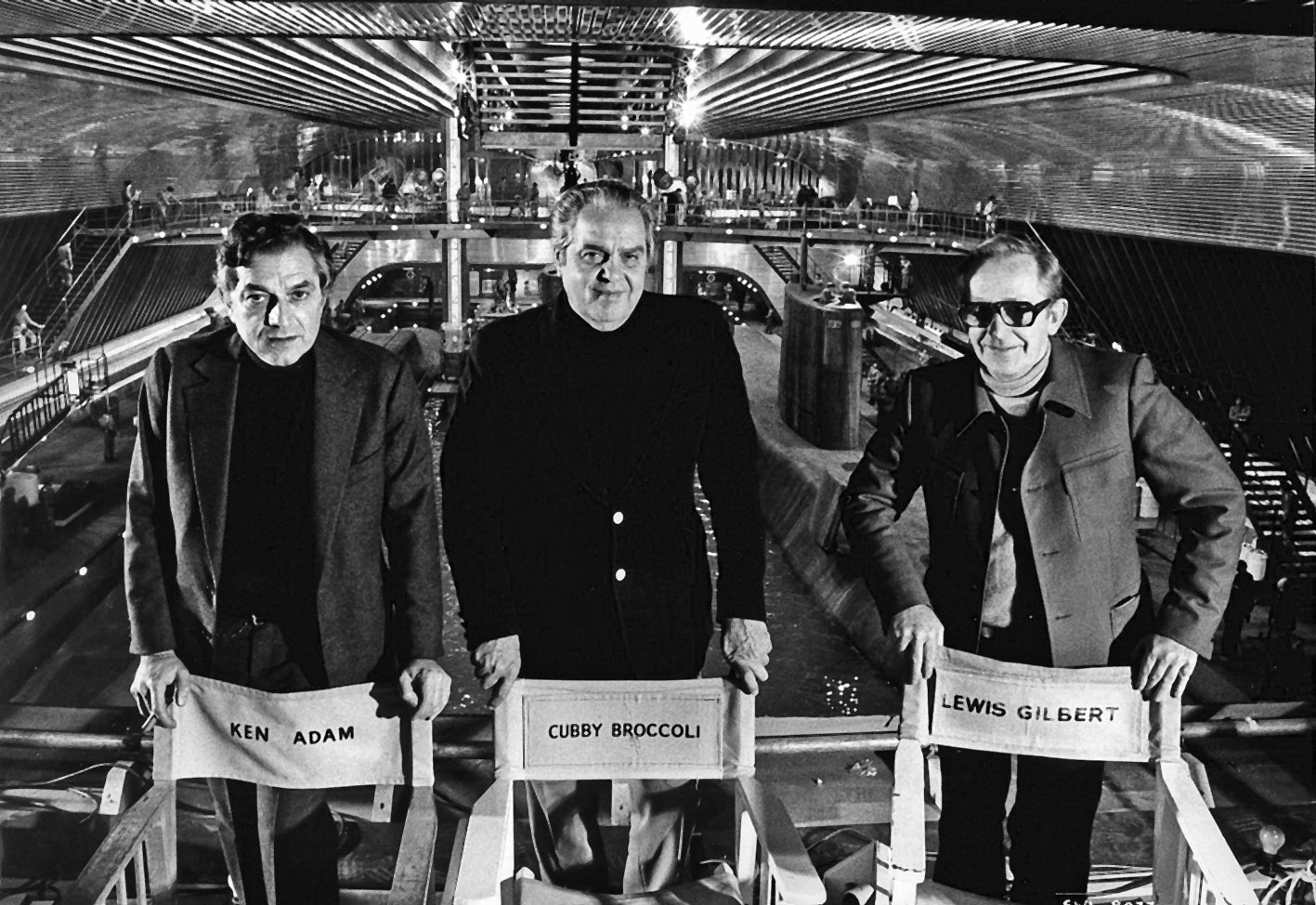
- (L-R) Ken Adam Bond, producer Albert R. ‘Cubby’ Broccoli and director Lewis Gilbert on the Spy Who Loved Me set
As Graham Rye, editor of 007 Magazine, explains, his extraordinary talent sprung out of a remarkable life.
Sir Ken Adam’s life unfolded with a drama and scale worthy of the films he would later help define. Born Klaus Hugo Adam into a German-Jewish family in Berlin in 1921, he spent his early childhood in a city sliding rapidly into danger. After Hitler’s rise to power, anti-Jewish laws targeted families like the Adams, whose successful sports and fashion store on the Kurfürstendamm faced intimidation, boycotts, and state pressure. In 1934, as persecution intensified, the Adam family fled to Britain – a decisive act that saved their lives and set the course for Ken Adam’s extraordinary future.
During the Second World War, Adam volunteered for the Royal Air Force and became one of only two German-born fighter pilots to fly for the RAF in WWII. Serving with No. 609 Squadron, he flew the Hawker Typhoon on low-level ground-attack missions over occupied Europe, dangerous sorties that demanded precision, nerve, and absolute clarity under pressure. These qualities – discipline, audacity, and a cool command of space – would later define his work in cinema.
After the war, Adam transformed the visual language of cinema. His bold, futuristic, and often audacious production designs for the James Bond film series created a new cinematic vocabulary – one that blended modernism, technology, and theatrical scale. His sets didn’t just support the story; they became the story. From supervillain Ernst Stavro Blofeld’s volcanic lair in You Only Live Twice (1967) to the cavernous super tanker interior in The Spy Who Loved Me (1977), Adam expanded what audiences believed movies could look like and what production design could achieve.
Across a career spanning more than five decades – and recognised with two Academy Awards – Sir Ken Adam reshaped the possibilities of cinematic world-building. His journey from refugee to RAF pilot to one of the most influential production designers of the twentieth century remains a testament to imagination, resilience, and the power of daring ideas.
-
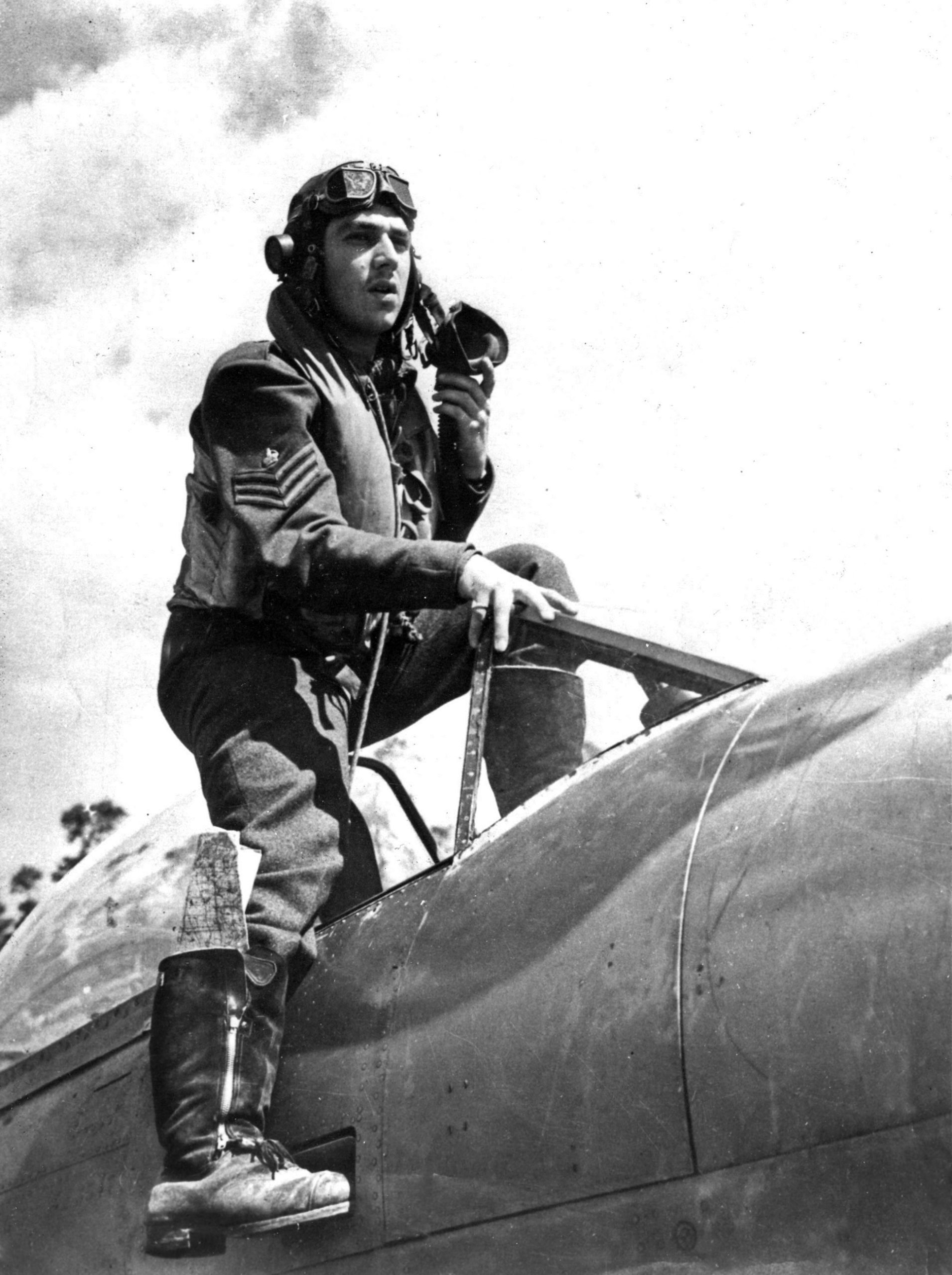
- During the Second World War, Ken Adam volunteered for the Royal Air Force and became one of only two German-born fighter pilots to fly for the RAF in WWII. Serving with No. 609 Squadron
-
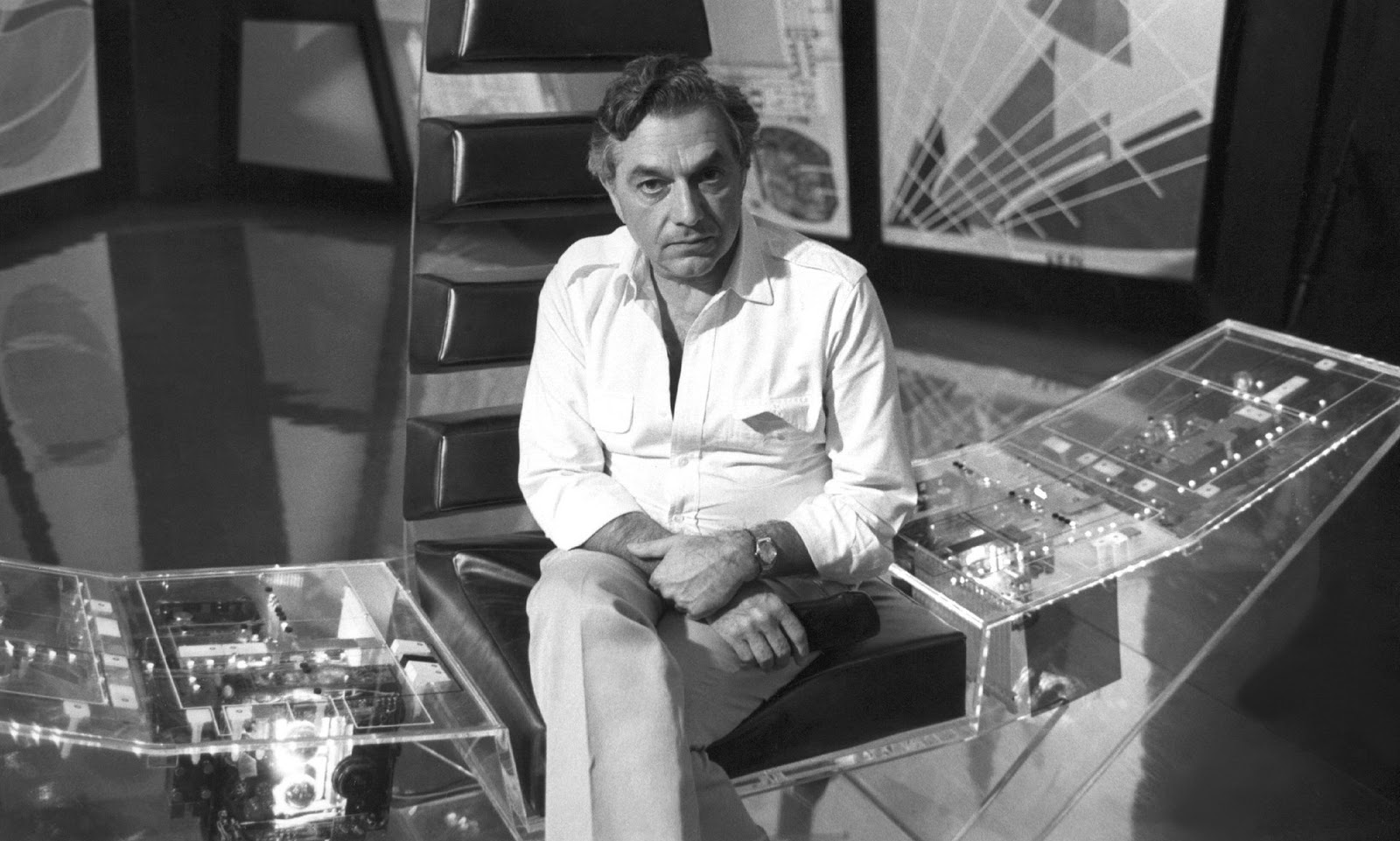
- Ken Adam poses on his set for Bond villain Hugo Drax’s control room in the eleventh James Bond film, Moonraker (1979). Built at the Boulogne-Billancourt Studios, France
-
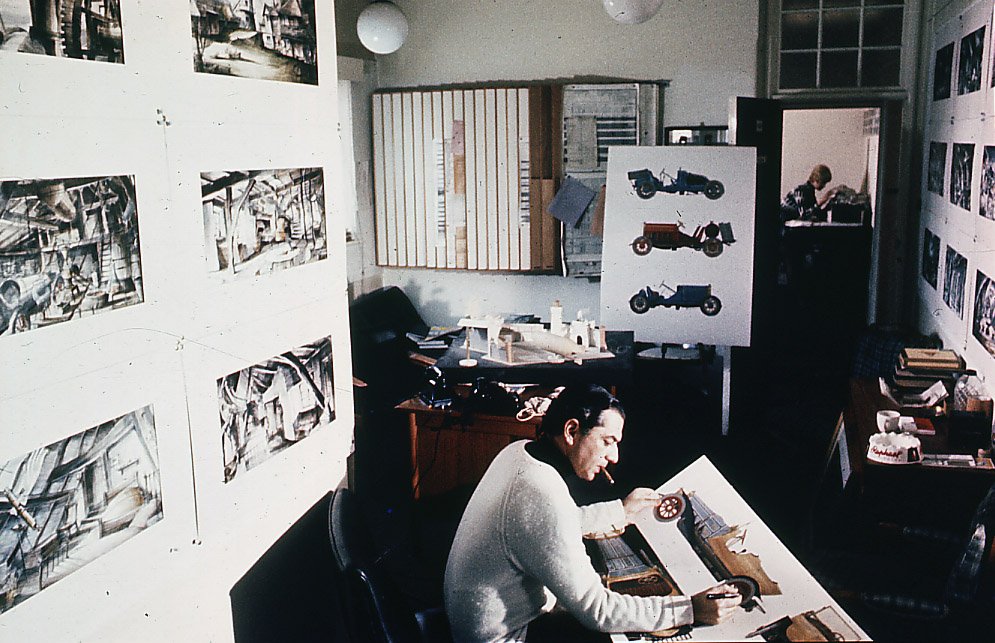
- Ken Adam at work in his studio office at Pinewood Studios for Chitty Chitty Bang Bang (1968)
-
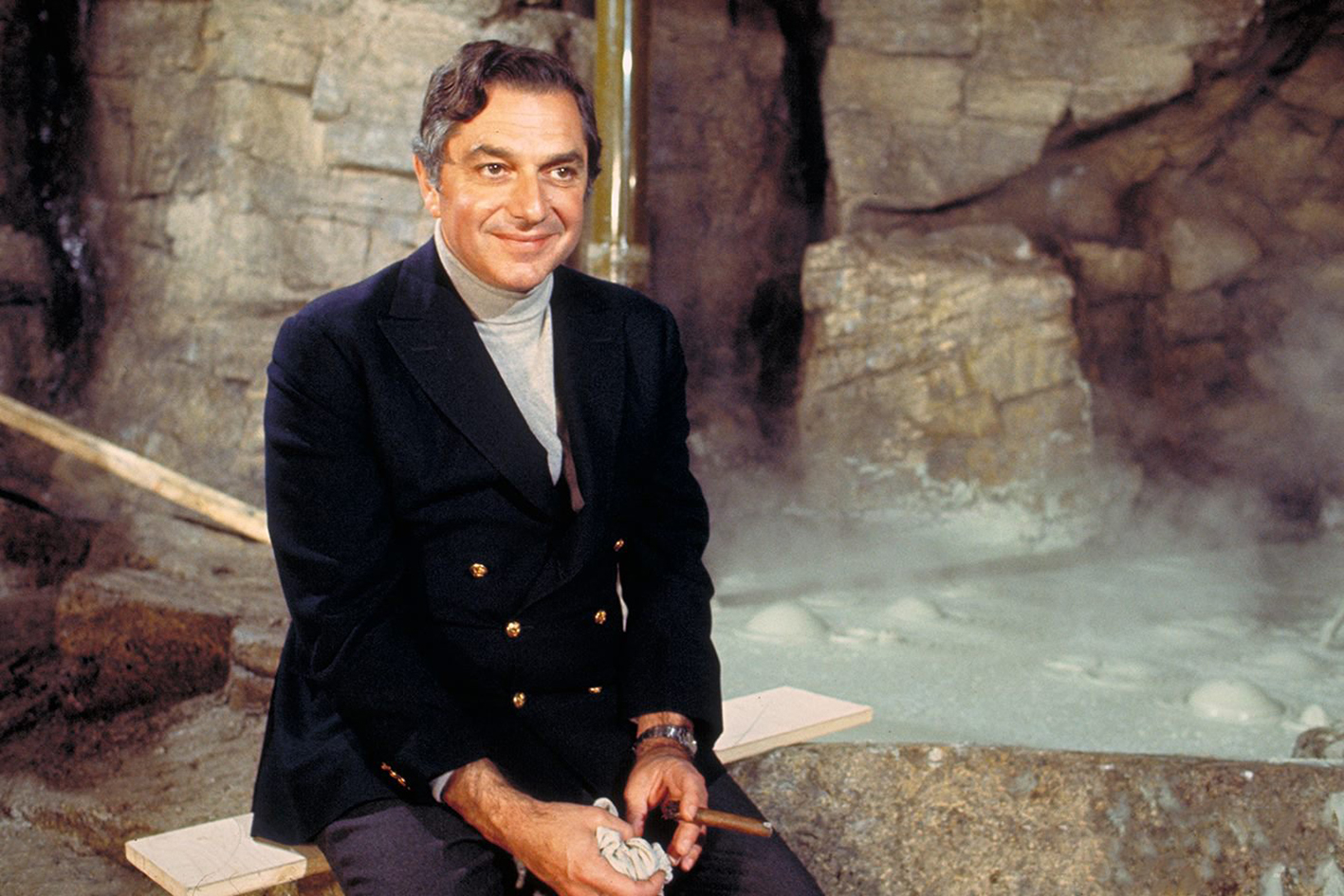
- Ken Adam poses on the ‘mud bath’ set used in the pre-credit sequence of Diamonds Are Forever (1971)
-
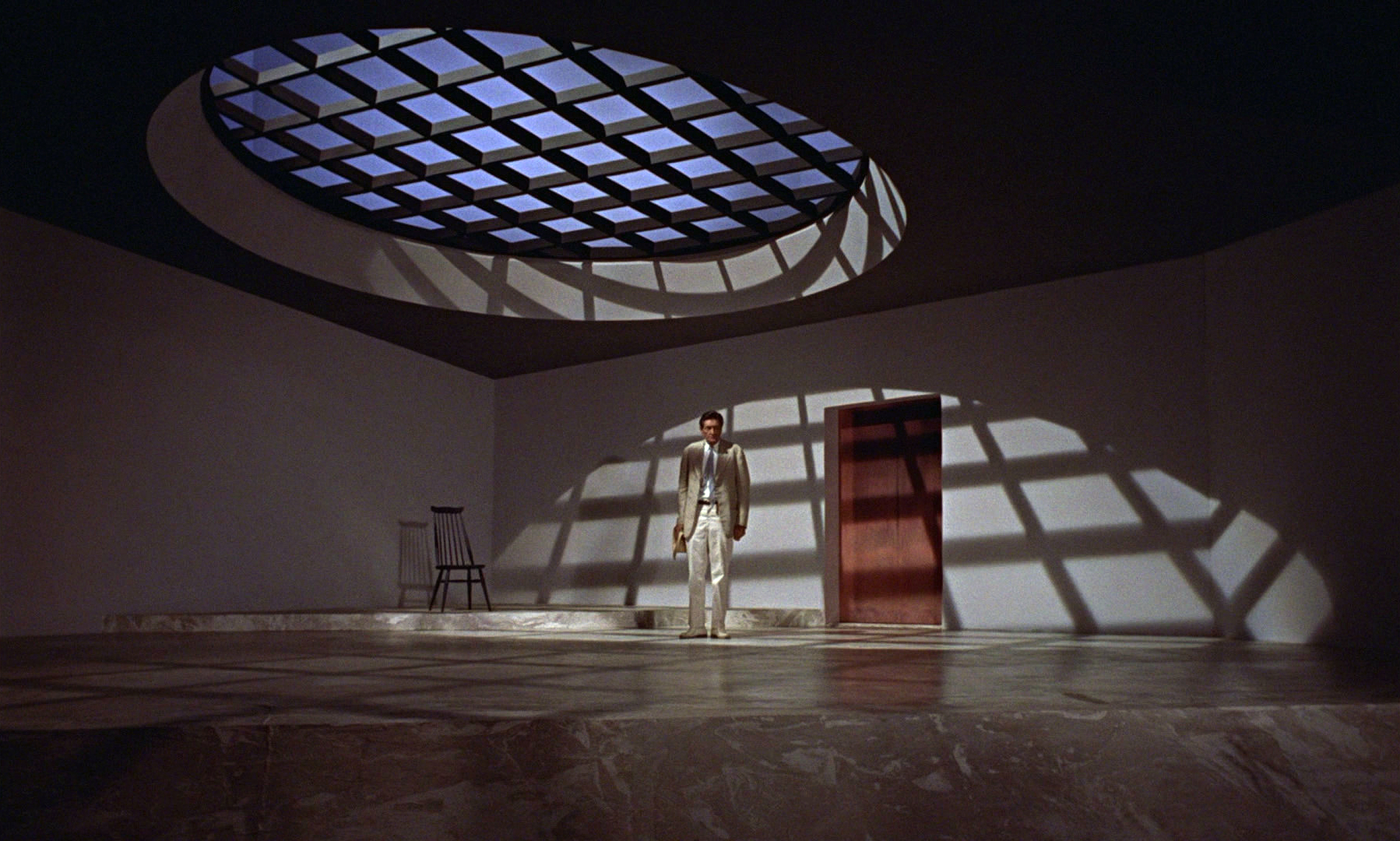
- Ken Adam’s masterful interrogation set in the first James Bond film, Dr. No ( 1962). During the screening of the rushes for the film at Pinewood Studios, the audience of crew members spontaneously broke out in applause when the scene appeared on screen
-
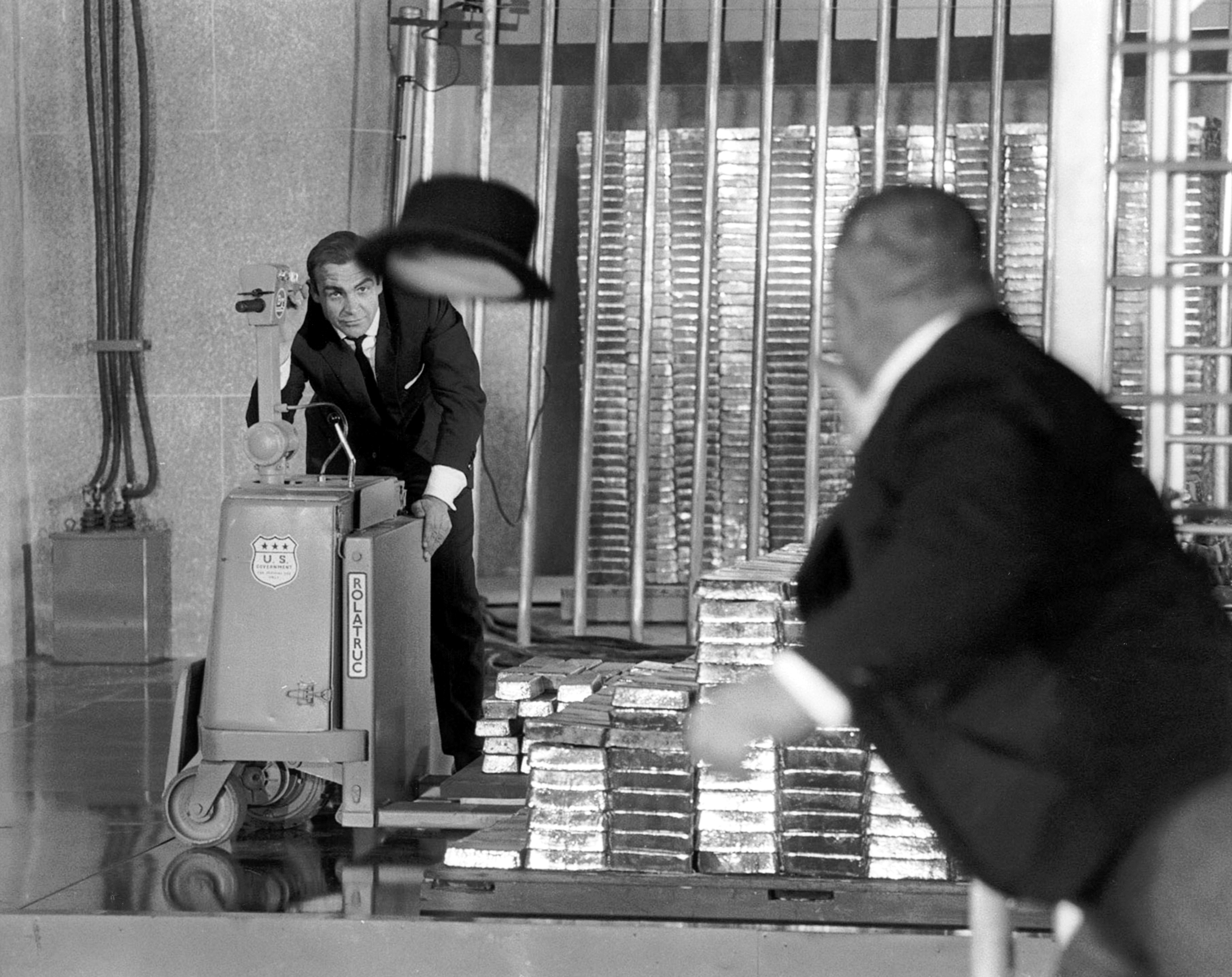
- Goldfinger (1964) – Ken Adam’s interior set of Fort Knox was akin to a cathedral of gold, in which James Bond (Sean Connery) and Oddjob (Harold Sakata) fought to an electrifying conclusion
-
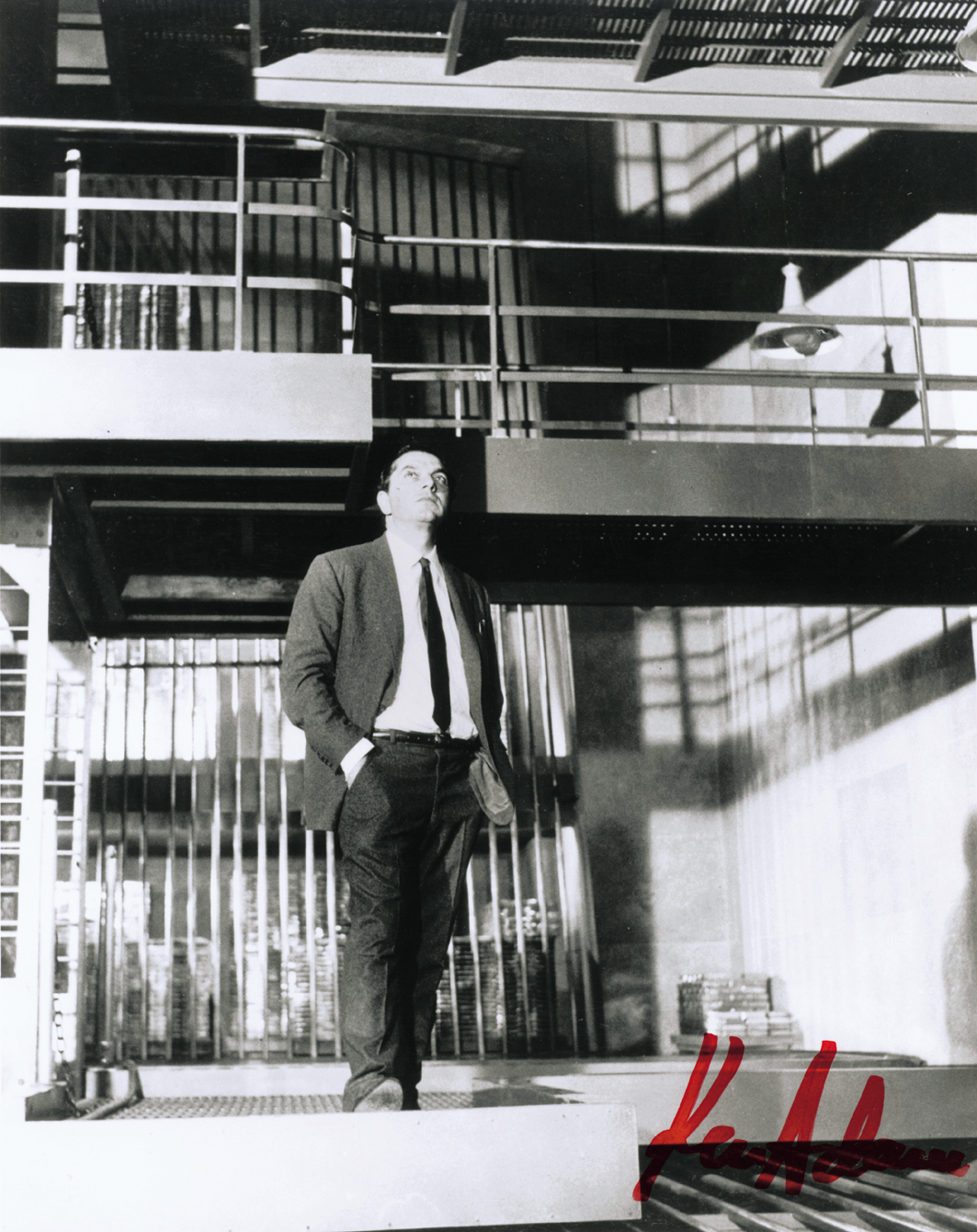
- Ken Adam surveys his interior Fort Knox set for Goldfinger (1964) at Pinewood Studios
-
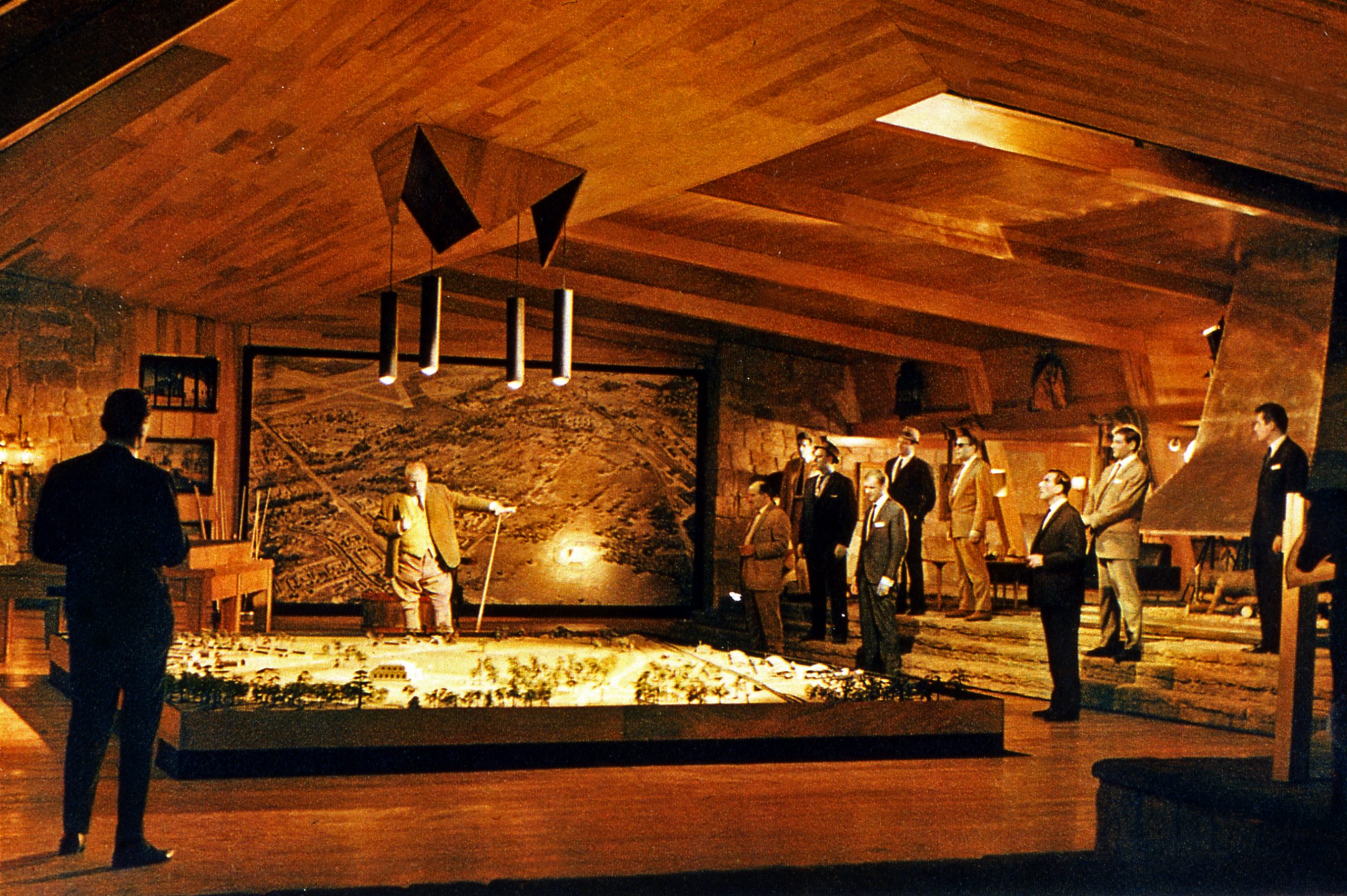
- Goldfinger (1964) Auric Goldfinger’s ‘Rumpus Room’ where the man with the Midas touch, a spider’s touch, lays out the skeleton of his plan to raid Fort Knox to an assembly of American gangsters who are essential to the success of his ‘Operation Grandslam’
-
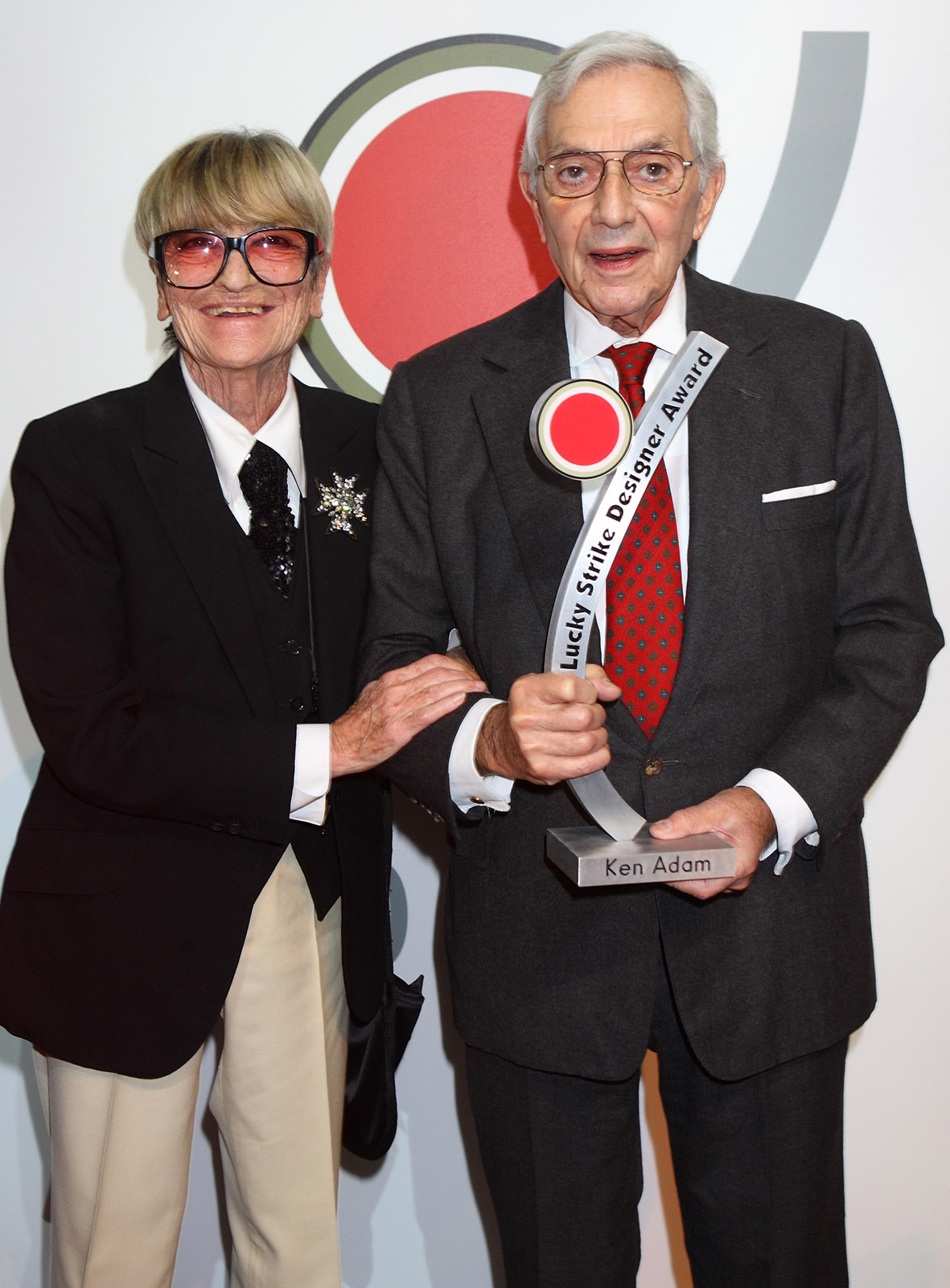
- Raymond Loewy Foundation Lucky Strike Award – the leading International Designer Prize. Sir Ken and Lady Adam attended the acceptance ceremony in the Berlin cinema Kino Kosmos in 2008
-
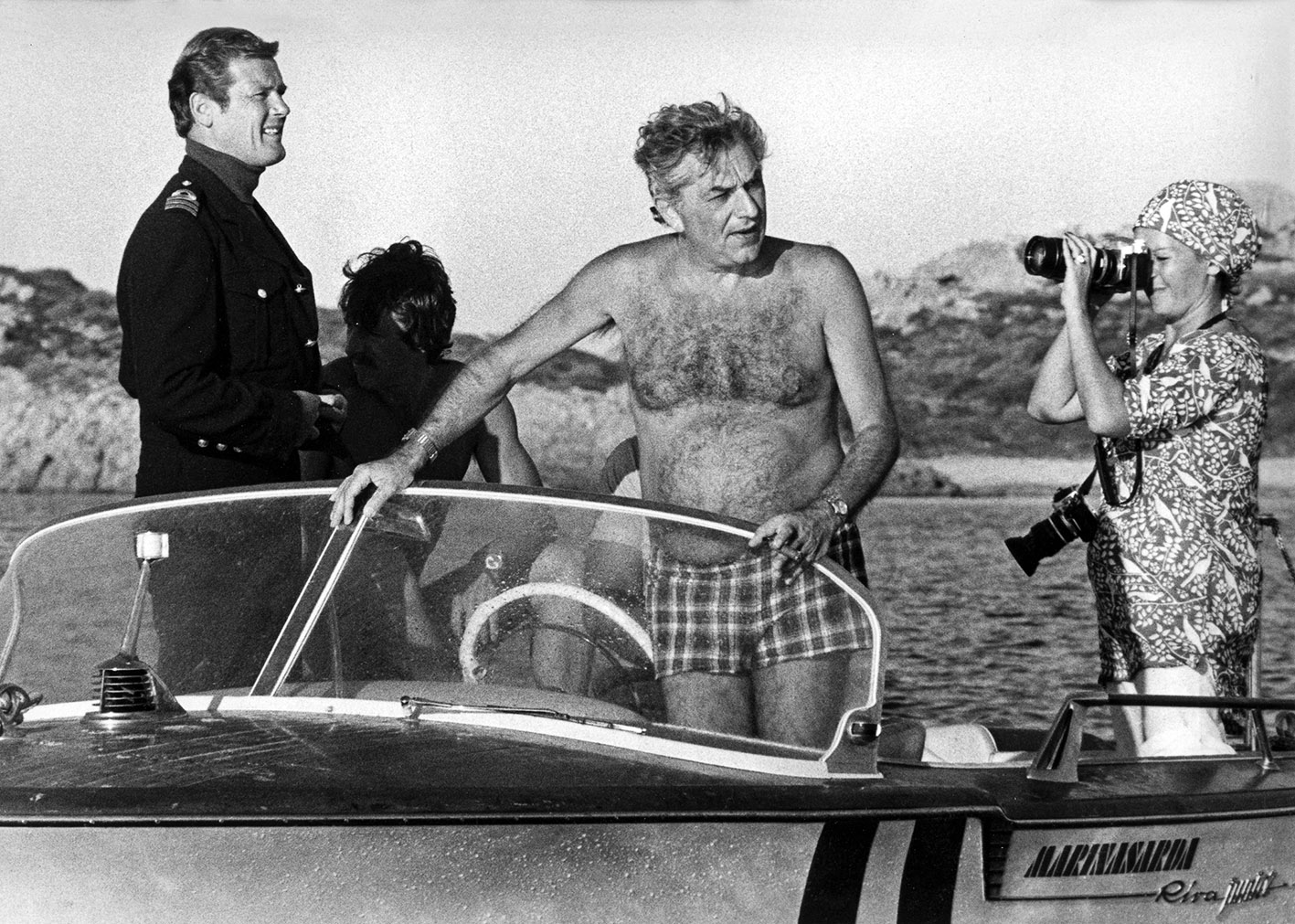
- On location in Sardinia for The Spy Who Loved Me (1977) (L-R) Roger Moore, Ken Adam, and Luisa Moore
-
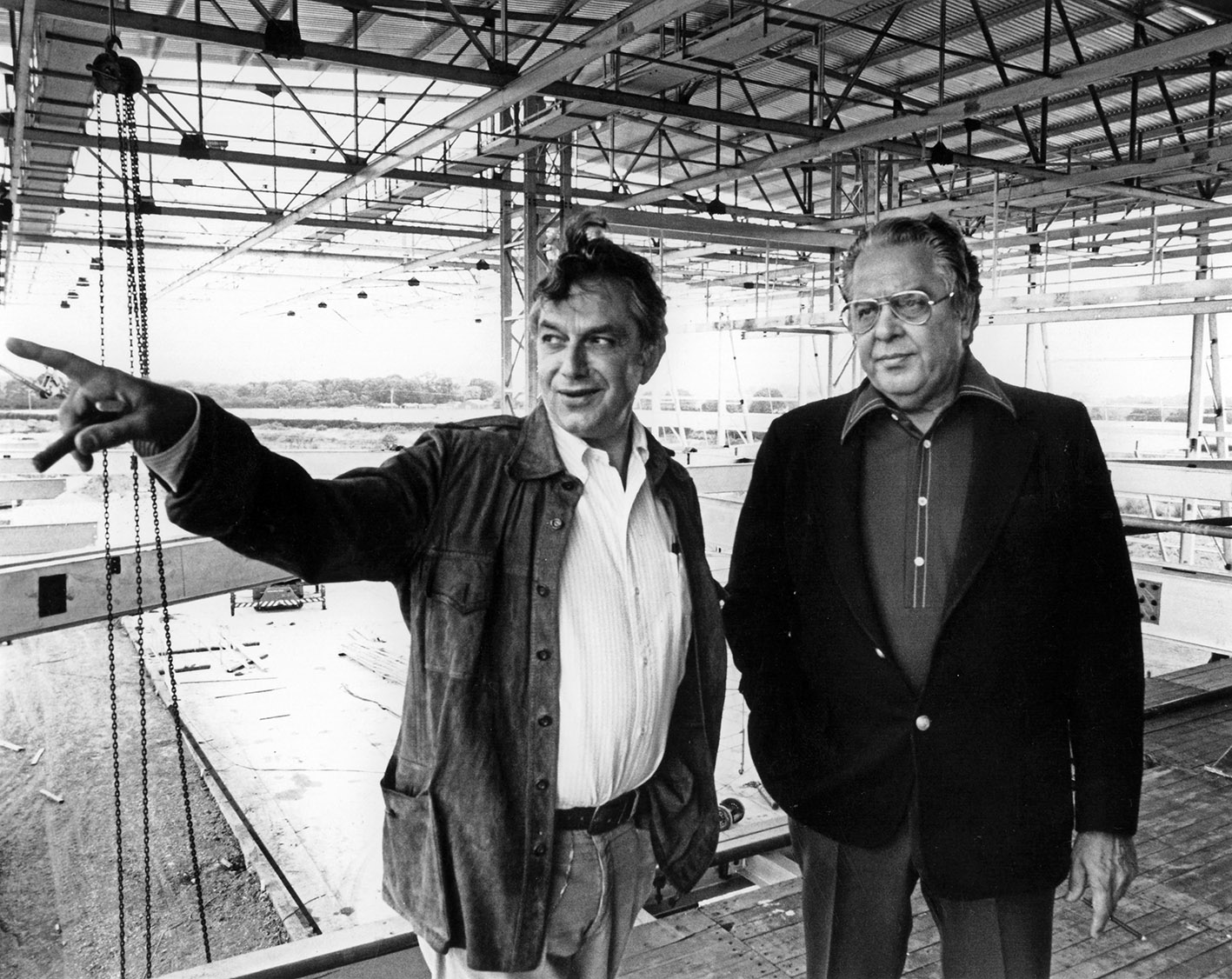
- Ken Adam accompanies Cubby Broccoli to examine the progress of the construction of ‘The 007 Stage’ at Pinewood Studios
-
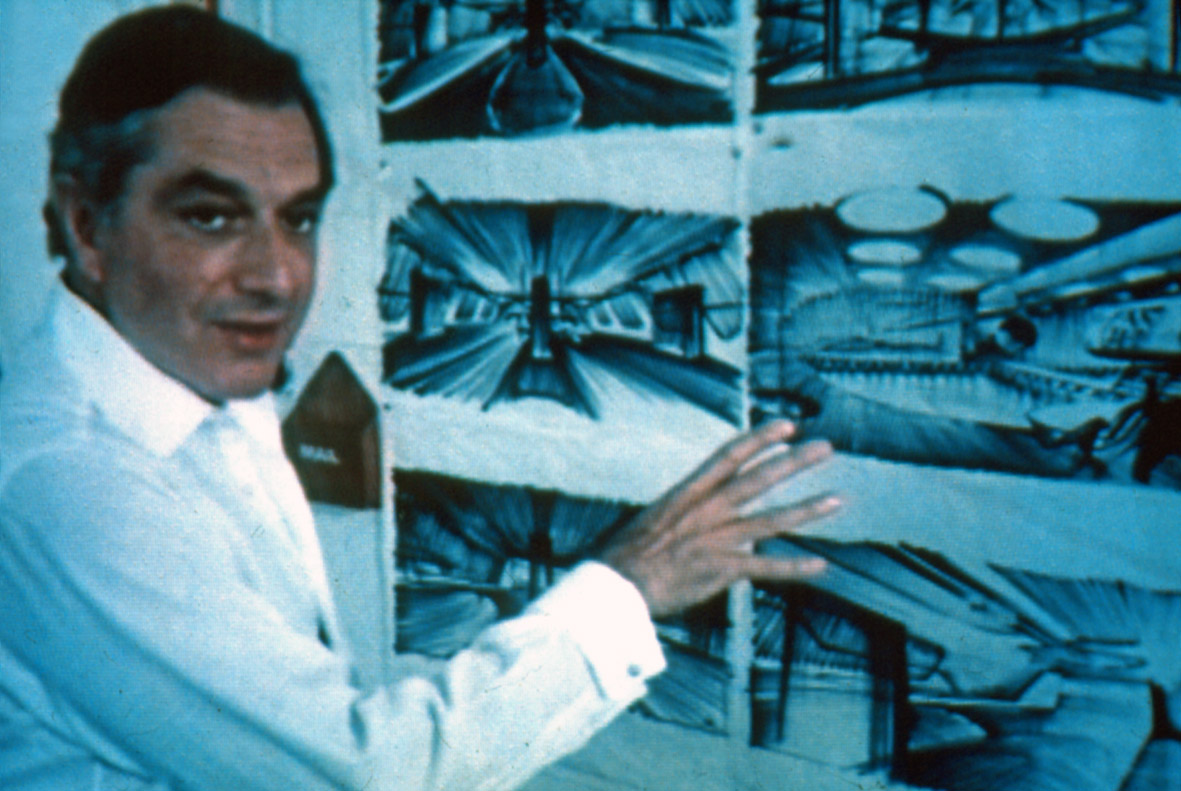
- In his office studio at Pinewood Studios, Ken Adam discusses his production drawings for the interior of the ‘Liparus’ Supertanker for The Spy Who Loved Me (1977)
-
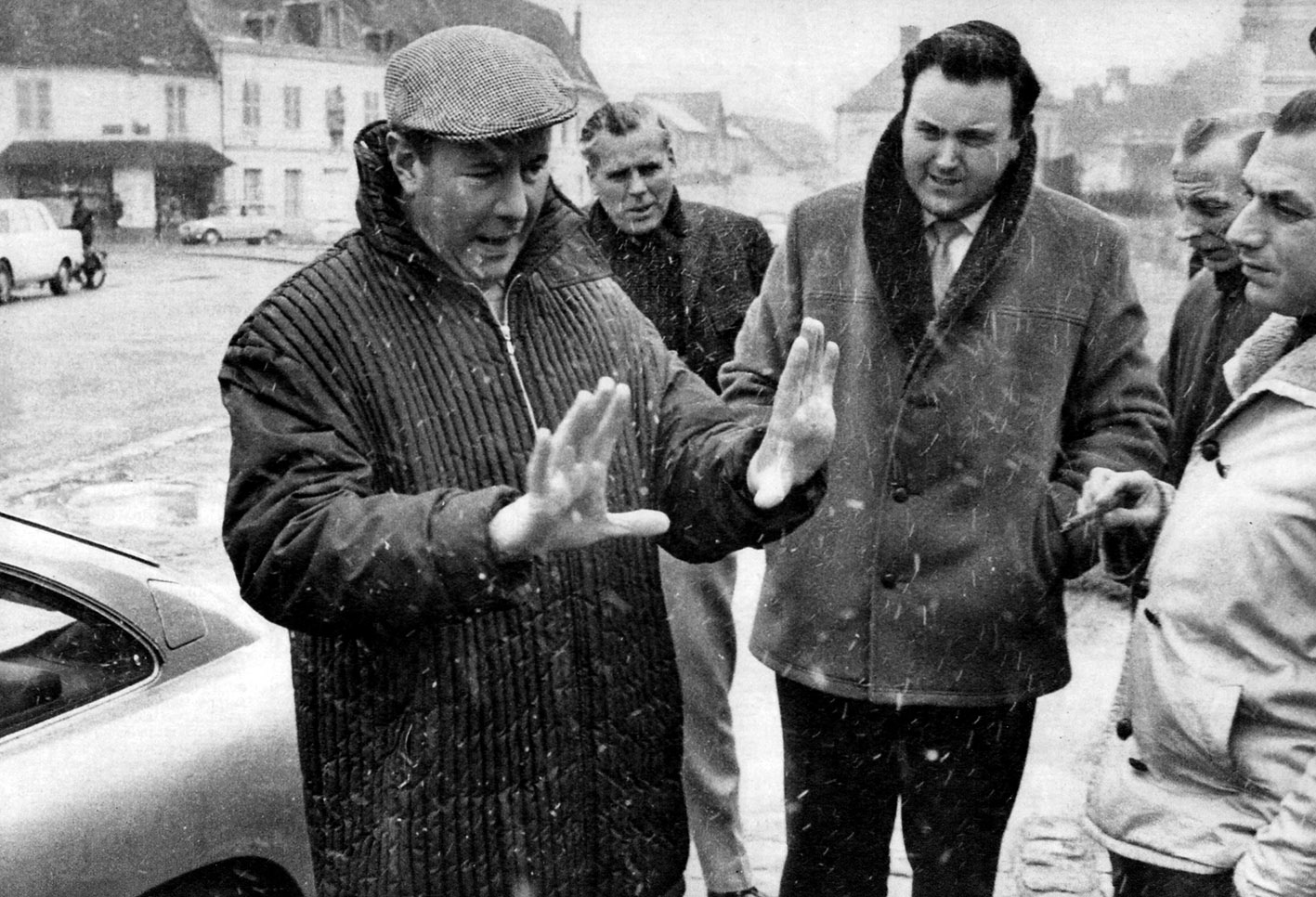
- Thunderball (1965) – on location near Paris, director Terence Young blocks out how he wants part of the pre-credit sequence shot with the Aston Martin DB5, while (left to right), producer Kevin McClory, Special Effects Head John Stears, Special Effects Technician Bert Luxford, and Ken Adam listened intently
Ken Adam – The James Bond Films
- Dr. No (1962)
- Goldfinger (1964)
- Thunderball (1965)
- You Only Live Twice (1967)
- Diamonds Are Forever (1971)
- The Spy Who Loved Me (1977)
- Moonraker (1979)
Ken Adam – Academy Awards for:
- Best Art Direction Barry Lyndon (1975)
- Best Art Direction The Madness of King George (1994)
-
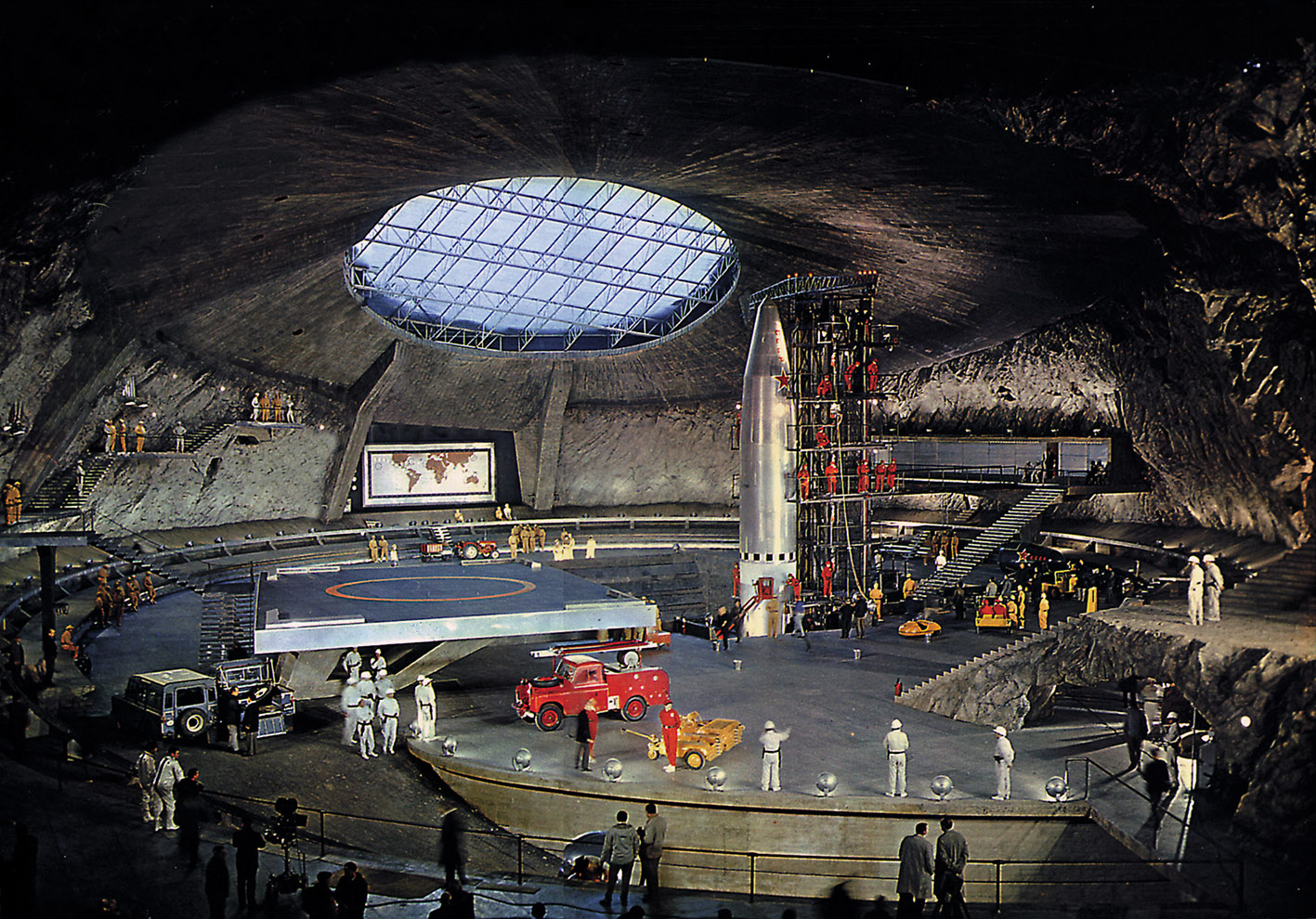
- Ken Adam’s masterful design – SPECTRE Supervillain Ernst Stavro Blofeld’s secret lair, a hollowed out volcano!
-
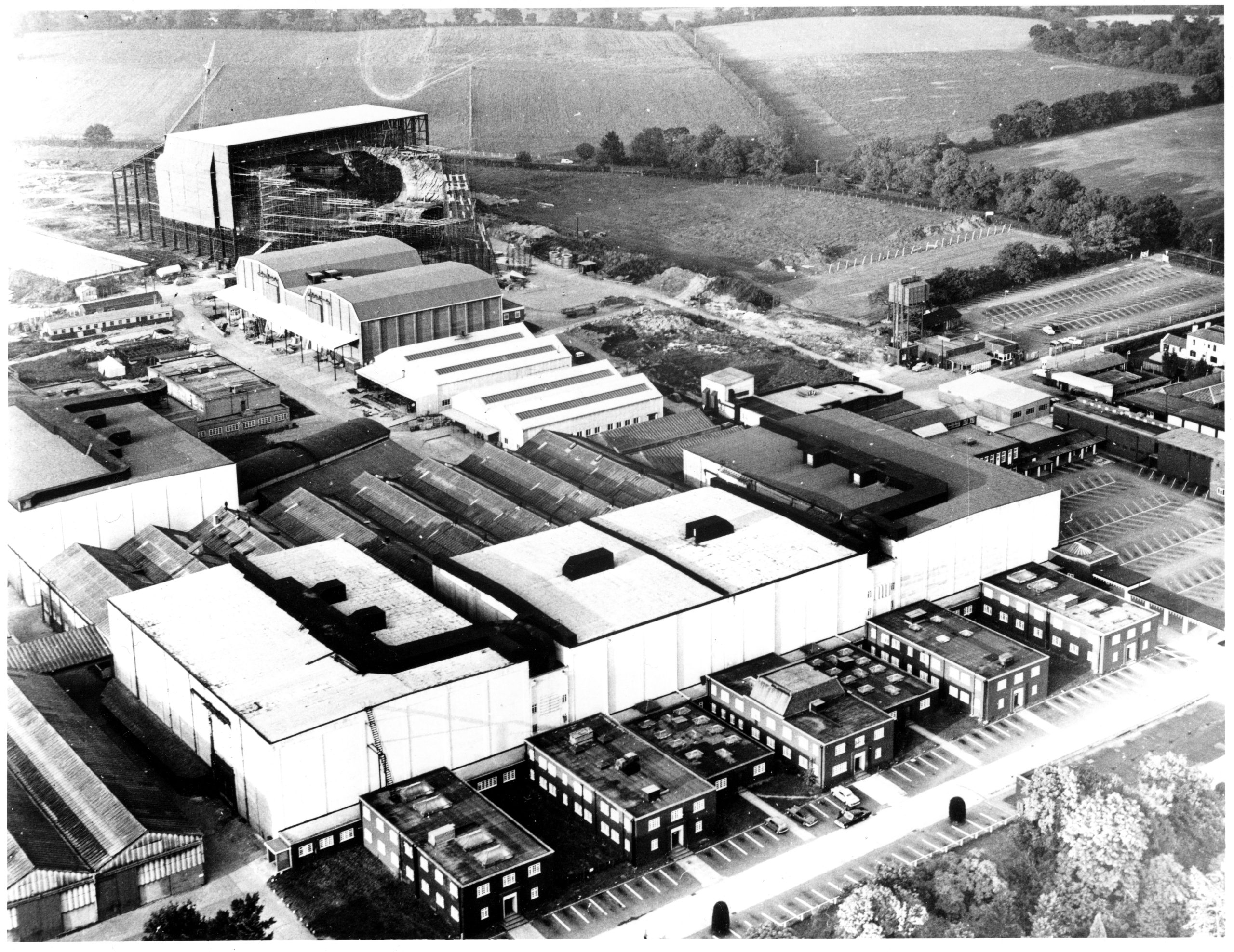
- The volcano set dwarfed the other soundstages on the Pinewood lot
-
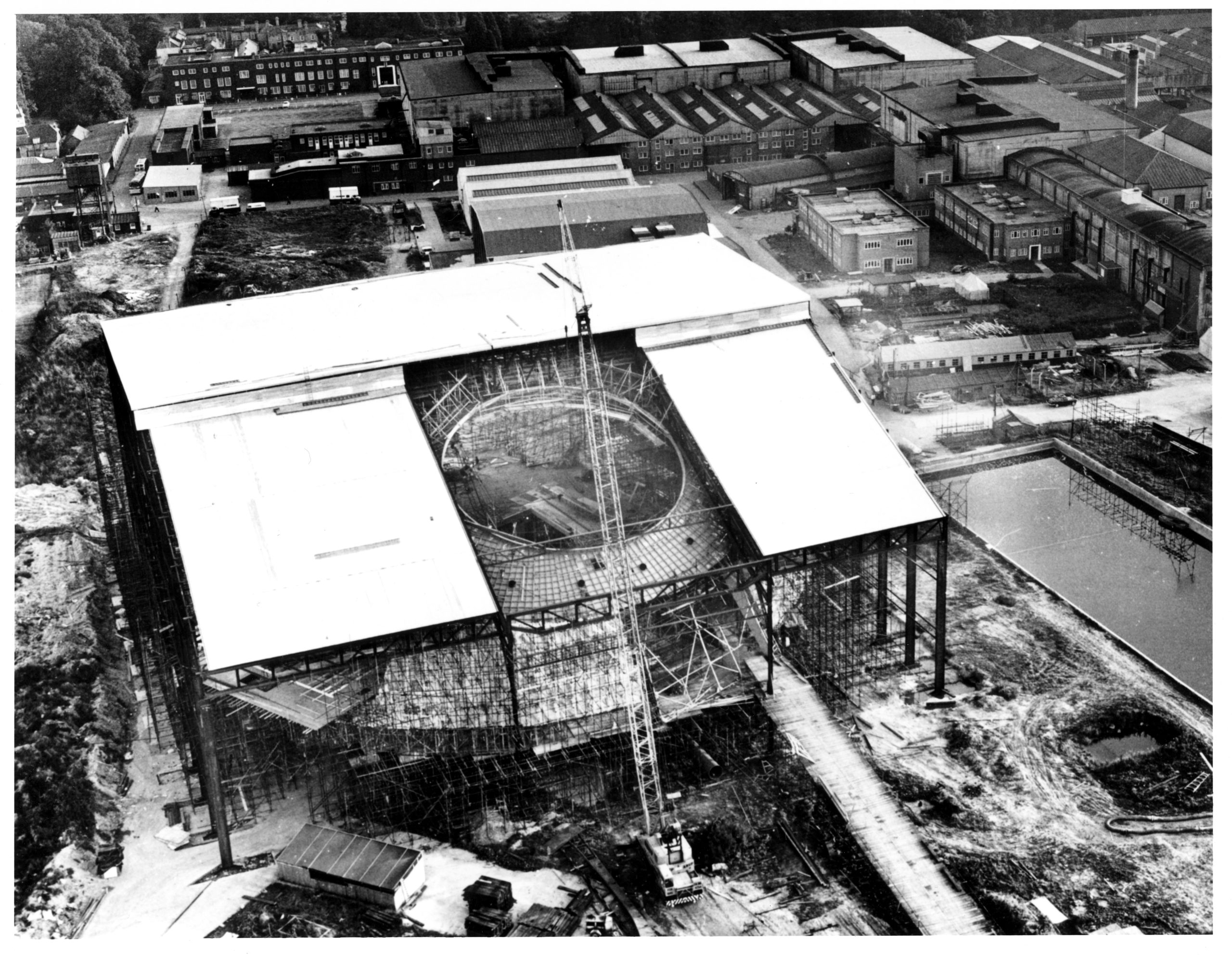
- The volcano set remained the major attraction on the Pinewood lot between 1966 and 1967
-
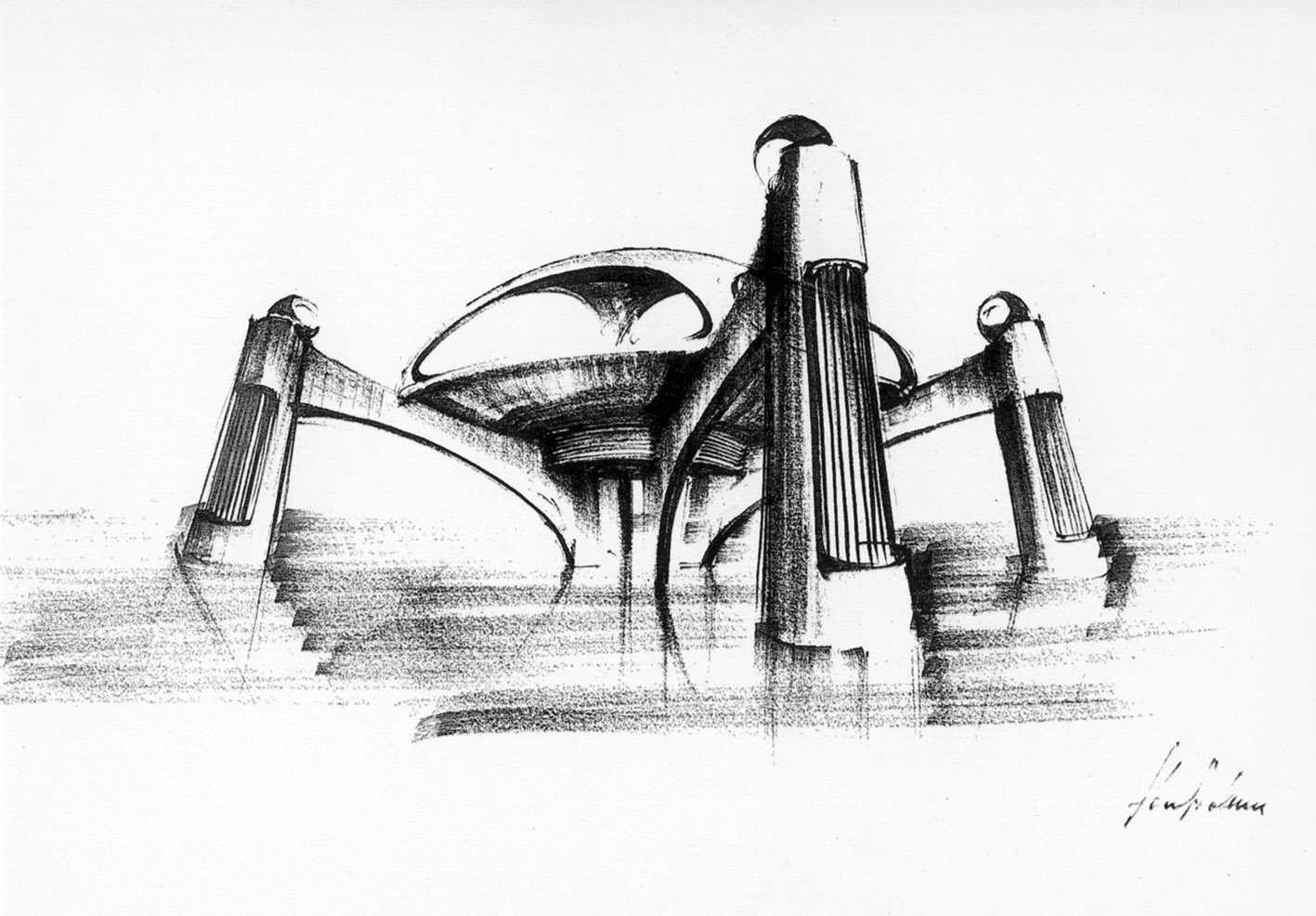
- Ken Adam’s production drawing for ‘Atlantis’, villain Karl Stromberg’s submersible headquarters. The Spy Who Loved Me (1977)
-
- Ken Adam’s design for shipping magnate, and megalomaniac, Karl Stromberg’s shipping company. The Spy Who Loved Me (1977)
-
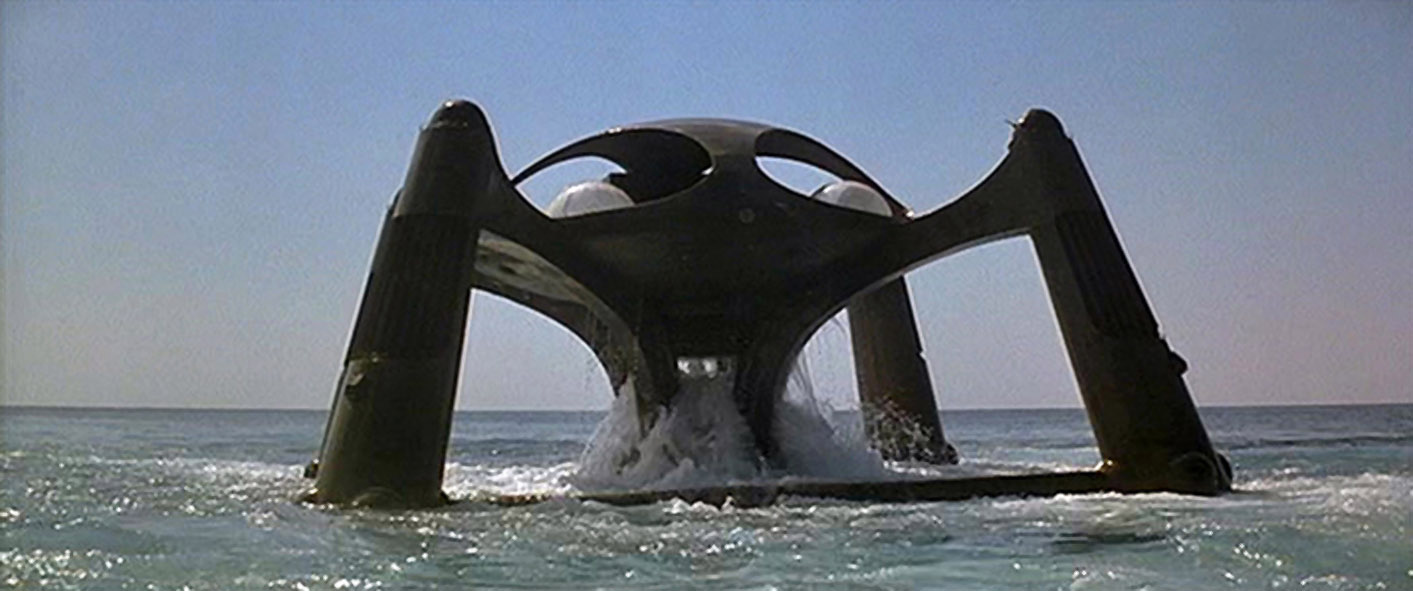
- Karl Stromberg’s underwater headquarters ascends from the ocean floor. The Spy Who Loved Me (1977)
-
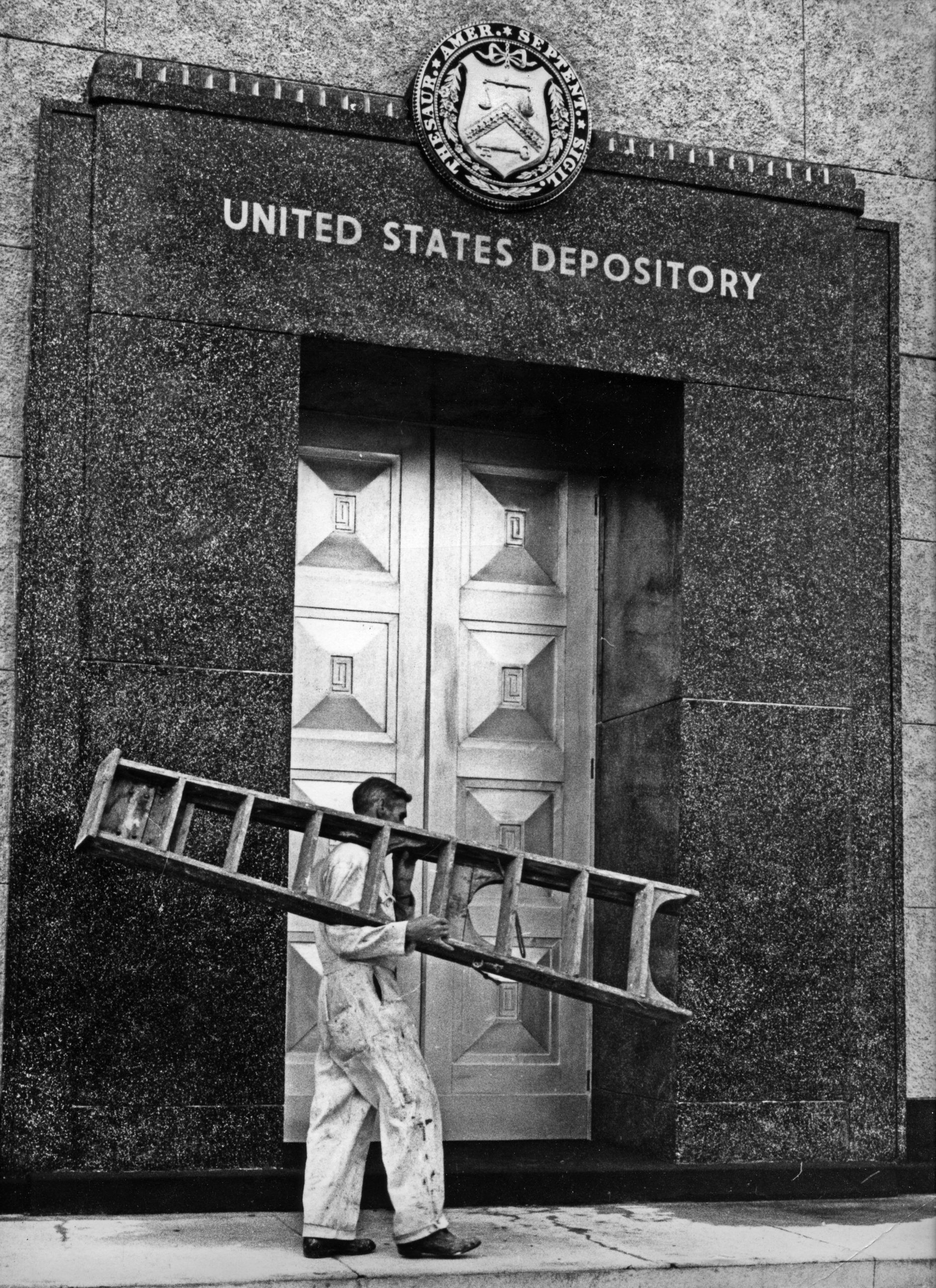
- Goldfinger (1964) A crew member passes by the exterior front doors of the Fort Knox set at Pinewood Studios
-
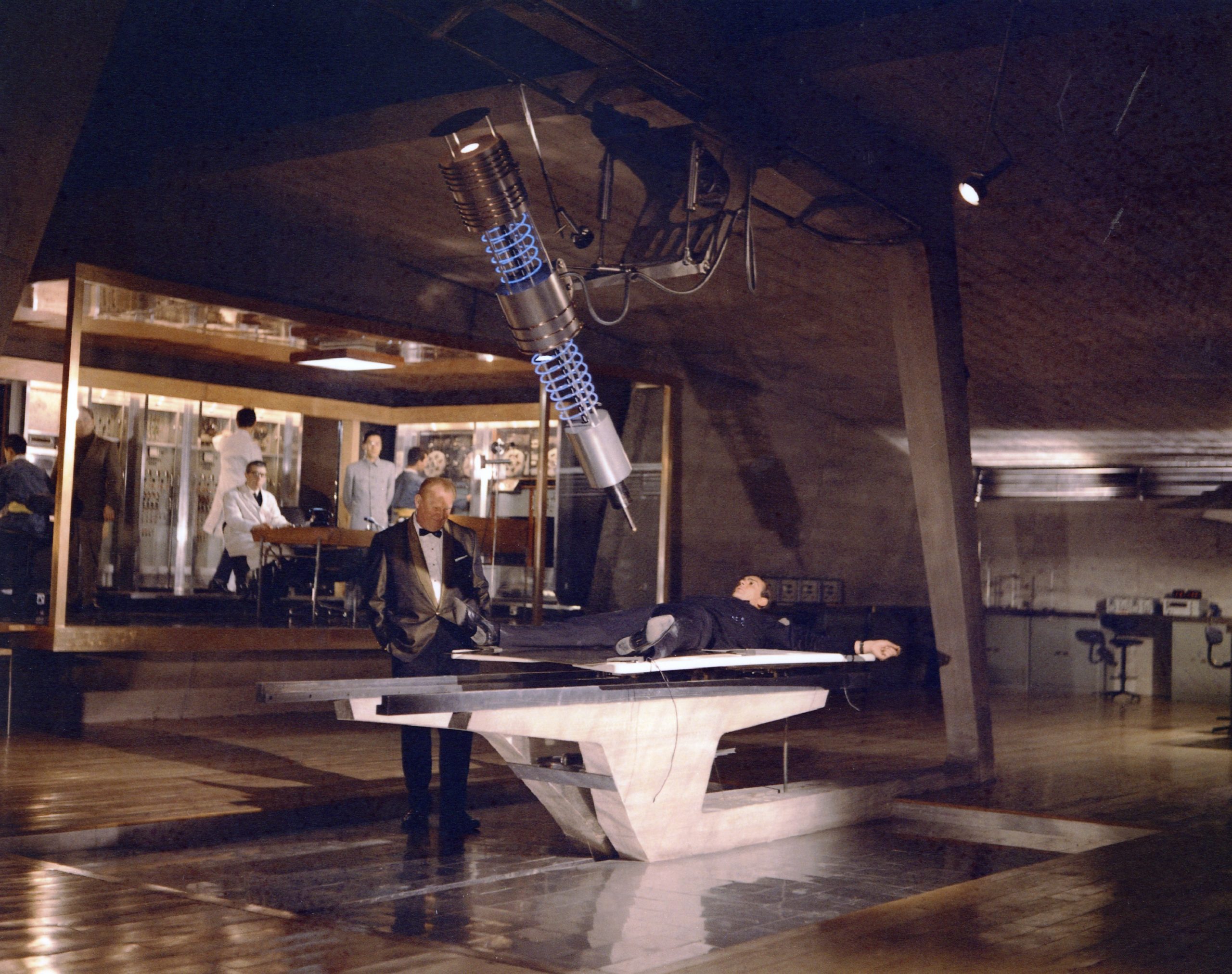
- Goldfinger (1964) Another Ken Adam masterpiece of simplistic set design – The Laser Room. ‘Do you expect me to talk. ‘No Mister Bond, I expect you to die!’
-
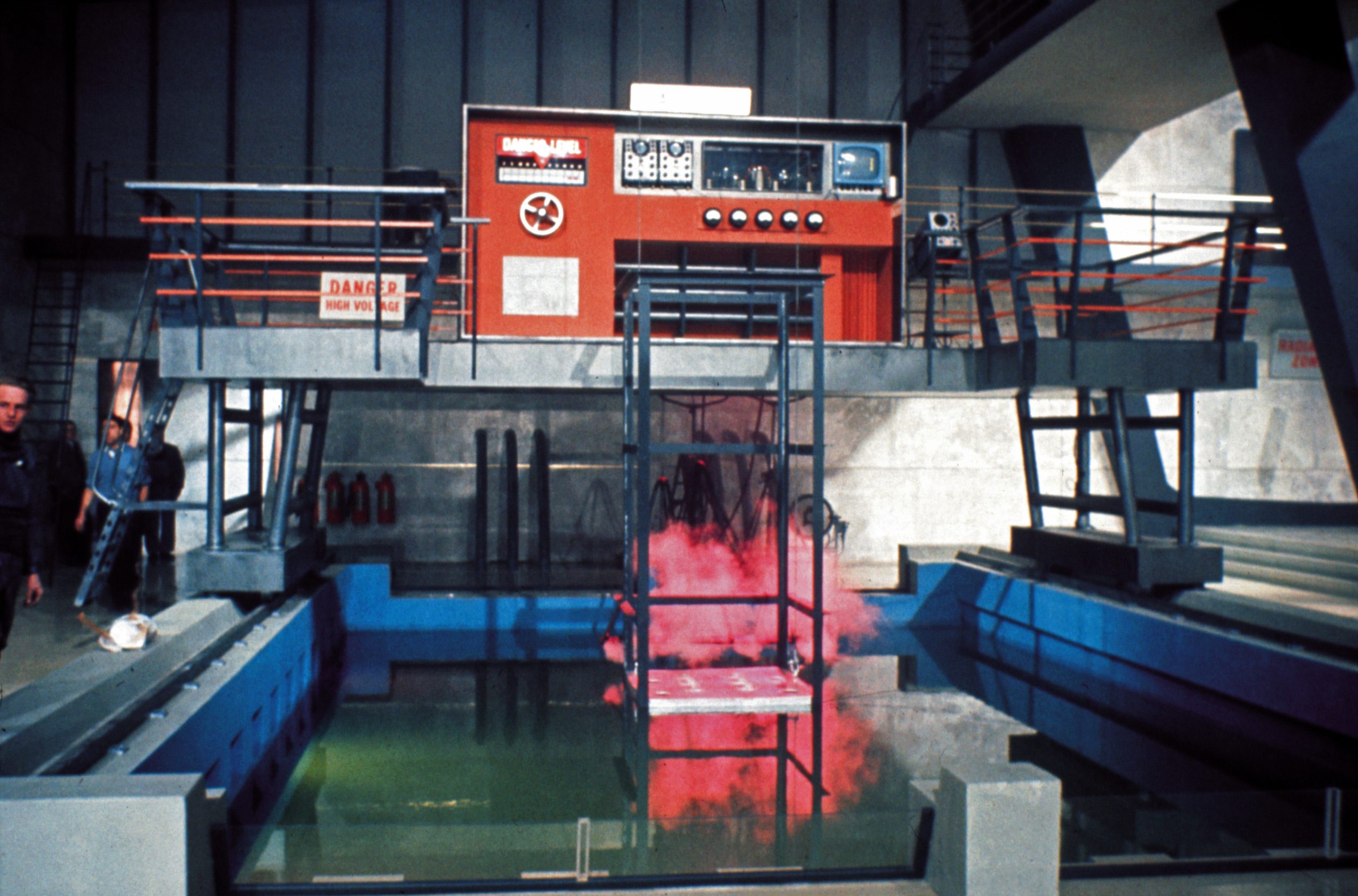
- 1 Doctor No’s nuclear reactor and Control Room in Dr. No (1962)
-
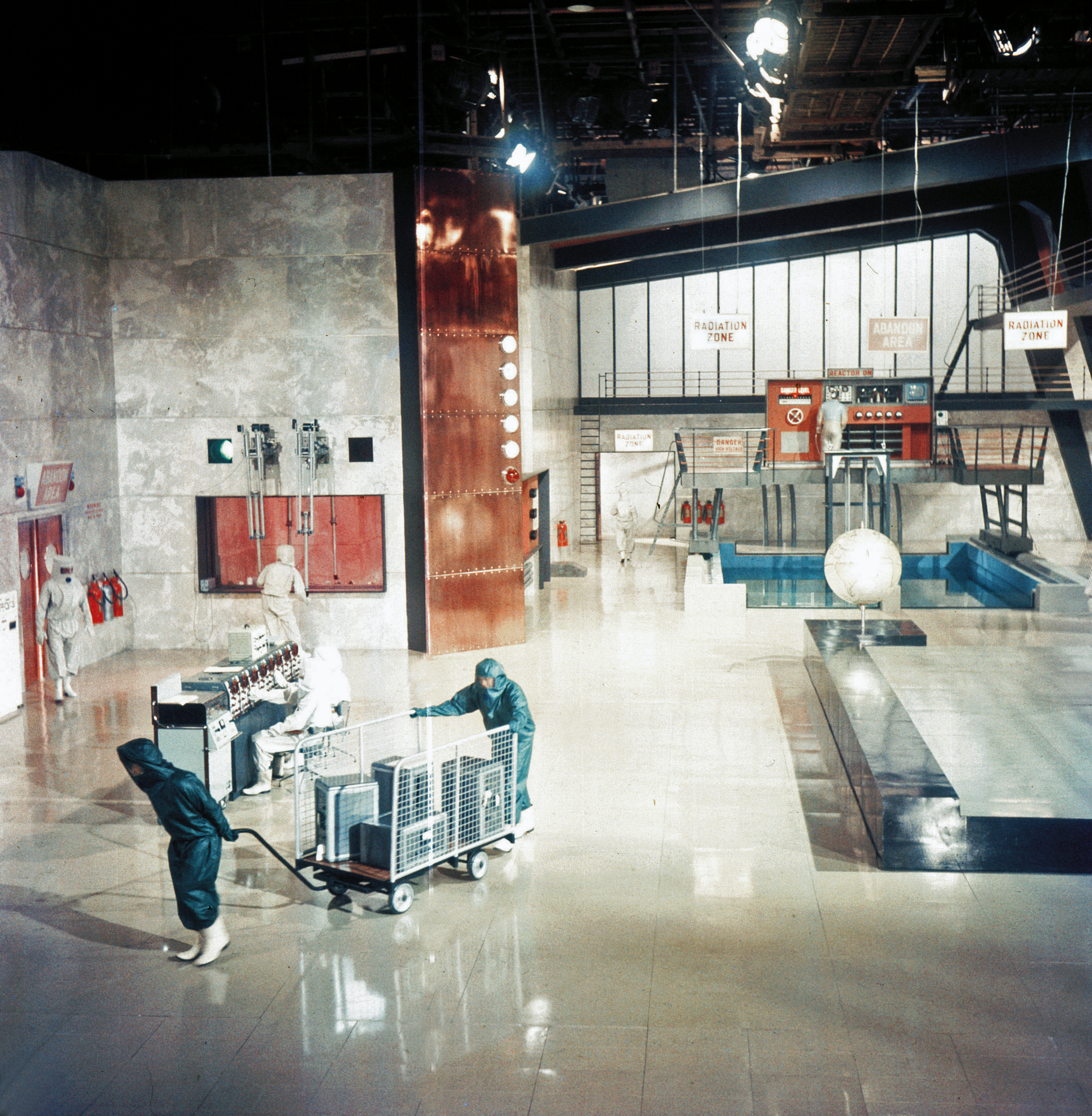
- 2 Doctor No’s nuclear reactor and Control Room in Dr. No (1962)
-
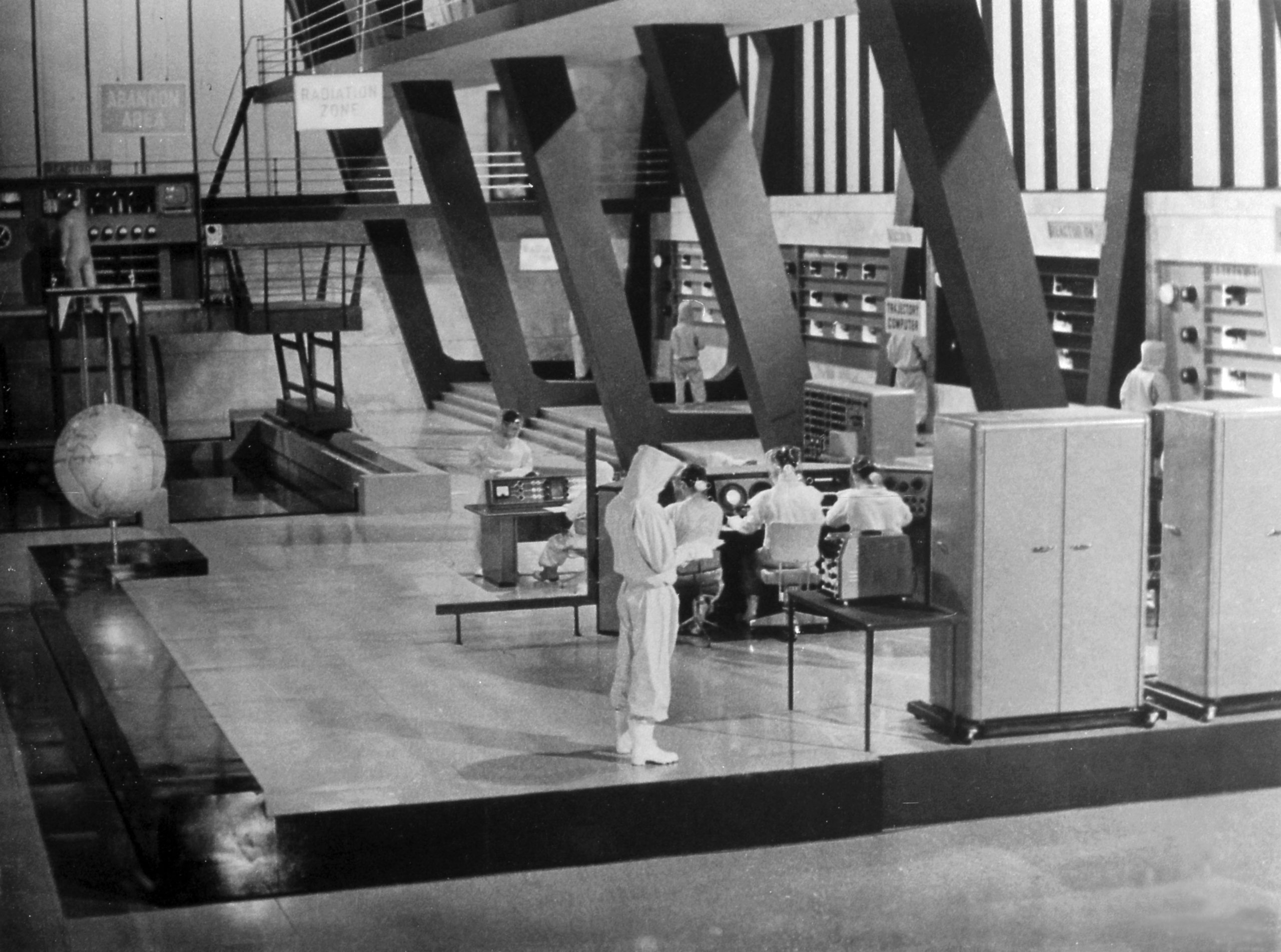
- 3 Doctor No’s nuclear reactor and Control Room in Dr. No (1962)
-
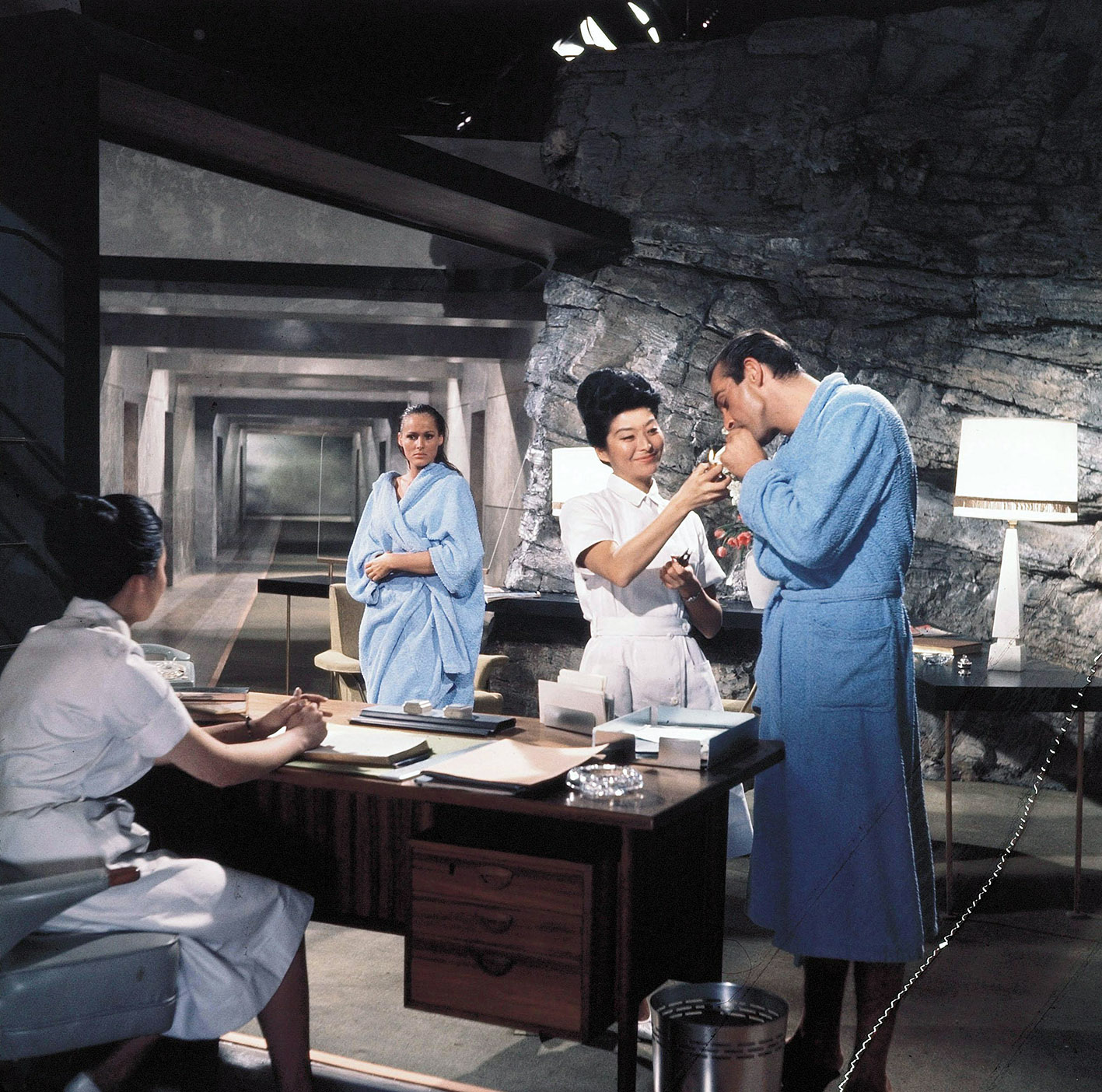
- A ‘mink-lined’ prison for James Bond (Sean Connery) and Honey Ryder (Ursula Andress) in Dr. No (1962)
-
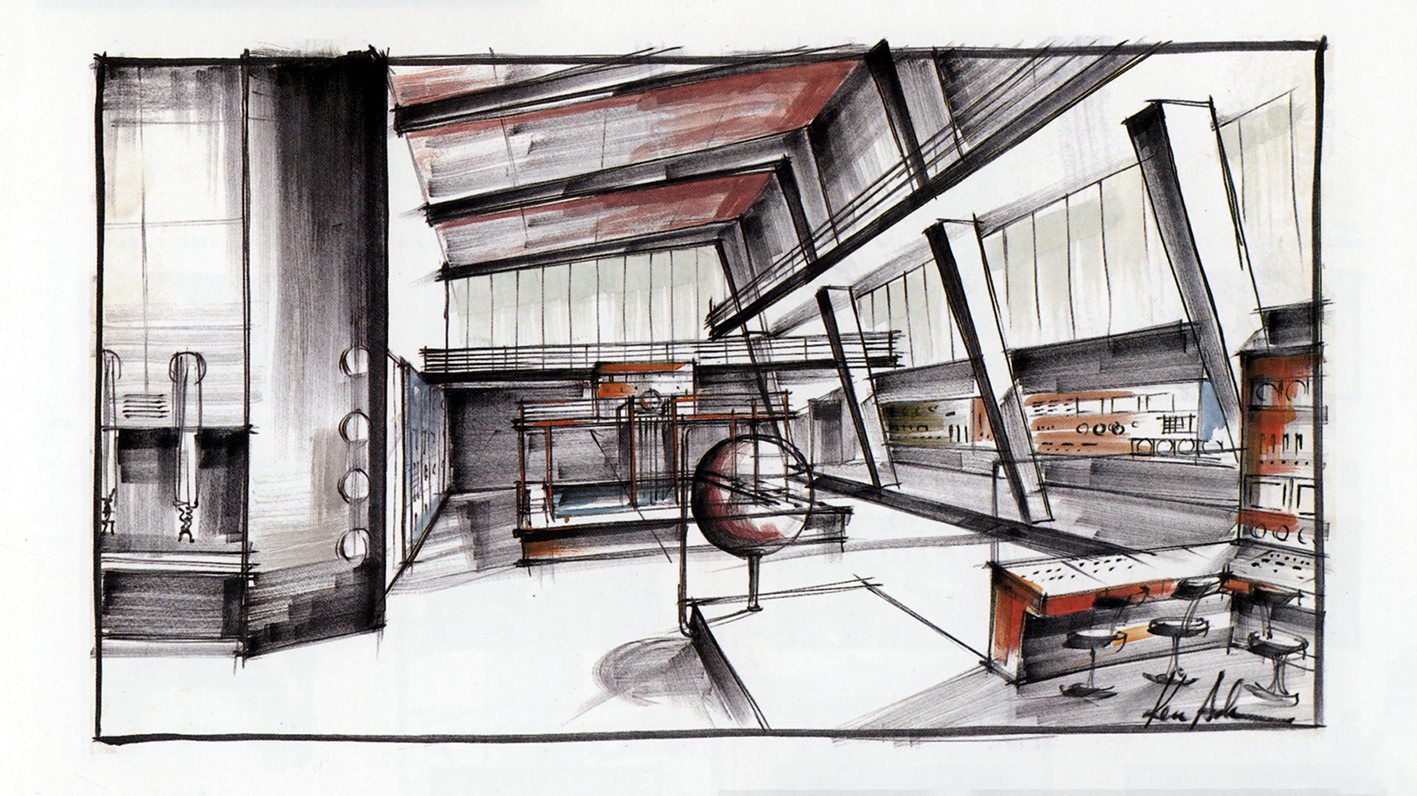
- Ken Adam’s production drawing for Doctor No’s nuclear reactor and Control Room in Dr. No (1962)
Images supplied courtesy of 007 MAGAZINE & ARCHIVE Limited. www.007magazine.com
A BBC Radio 3 interview with Sir Ken Adam by Matthew Sweeting which “explores how Sir Ken Adam’s playful take on modernism has influenced not just film but also the real world, feeding the imagination of a generation of architects and changing our built environment” with contributions from modernist architect Norman Foster, the then Director of the National Theatre Nicholas Hytner (who worked with Ken on The Madness of King George), longtime friend the cultural historian Christopher Frayling, Julia Peyton Jones, formerly Co-Director of the Serpentine Gallery, and design writer Jonathan Glancey, is available to listen to HERE
The Northern School of Art’s BA (Hons) Set Design for Stage & Screen programme combines practical training with industry-led teaching to prepare students for careers in stage and screen design. Working alongside professionals from theatre, film and TV, students gain hands-on experience in set design, construction and scenic production, with opportunities to collaborate on live projects and full-scale productions using professional studio and workshop facilities. Find out more HERE