
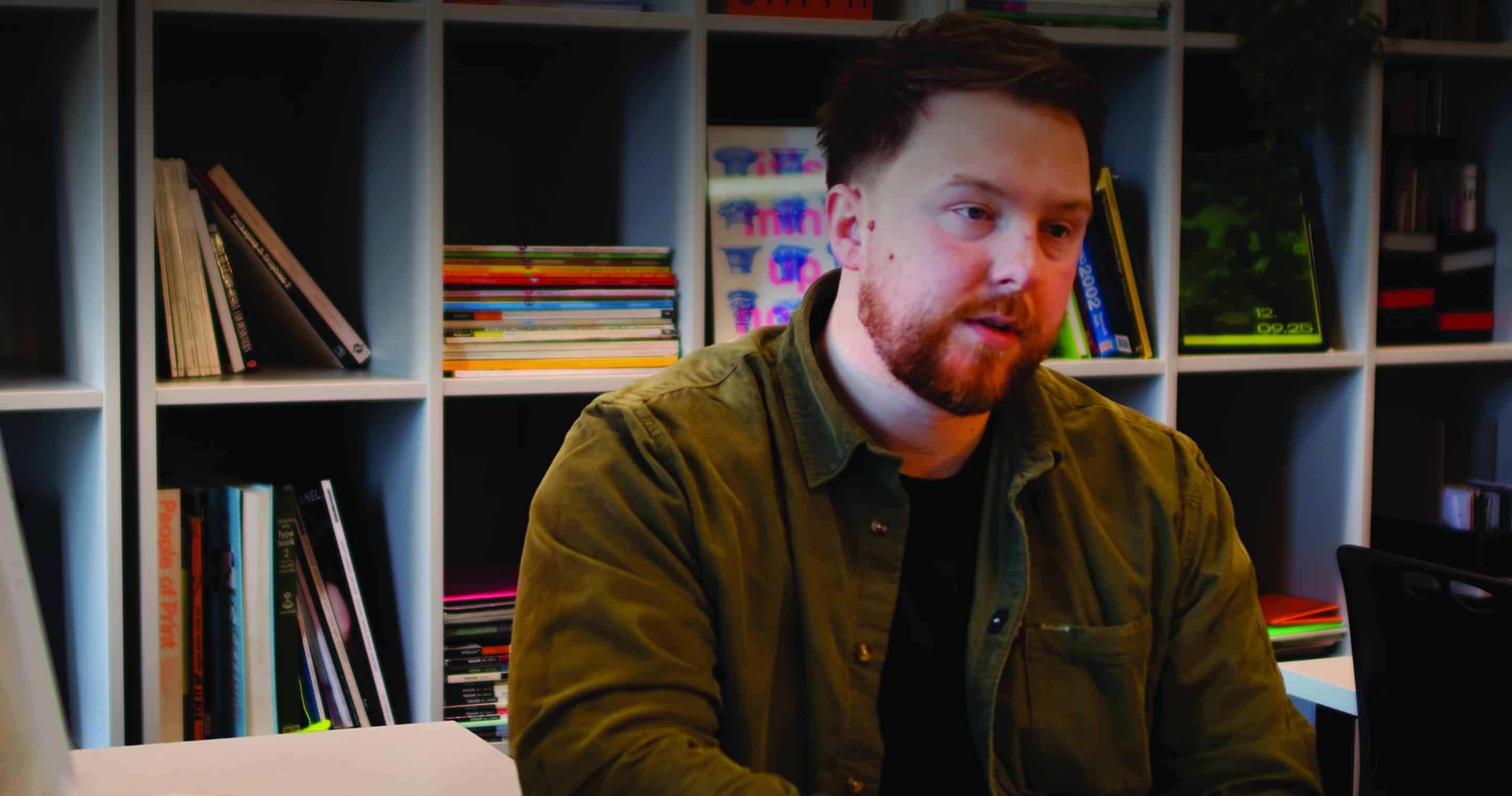
We recently welcomed alumnus Jake Lowes back to campus to talk about his career in graphic design and share his advice with students looking to study at our Middlesbrough campus or take their first steps into the creative industries.
Jake studied at our Green Lane campus under our former name, CCAD. Reflecting on joining the college, he said: “I was encouraged by my mum to try something different. With just enough GCSEs and no portfolio, Amanda, my tutor, motivated me to enrol and nurtured my creative talents, despite my limited experience in art and design.”
Before studying at the college, Jake said he struggled with confidence. “Before college, I didn’t find joy in school. Being dyslexic and dyspraxic made it difficult to keep up, but at college, the tutors were supportive and focused on my personal growth. They were more interested in kickstarting my creativity”
Jake said he enjoyed the college’s collaborative approach. “Students on the course were encouraged to embrace failure as part of the learning process and to develop their creative thinking collectively and individually. The college gives you space to experiment, and the more you do so, the less you limit yourself to.”
After finishing his diploma, he admitted he had initially been concerned about entering the creative industries when he joined the course. “I was worried at first about the creative prospects, but at the college there is plenty of exposure to live briefs and industry experience, so I had a good idea of what was out there waiting for me.”
After university, Jake worked in and around in-house and design agency roles. He also worked as a graphic designer on the school’s marketing team before moving to Manchester to gain experience with larger clients and more complex briefs, while sticking to his mantra of “keep going” – a phrase he adopted while studying at the college and that his tutors echoed.
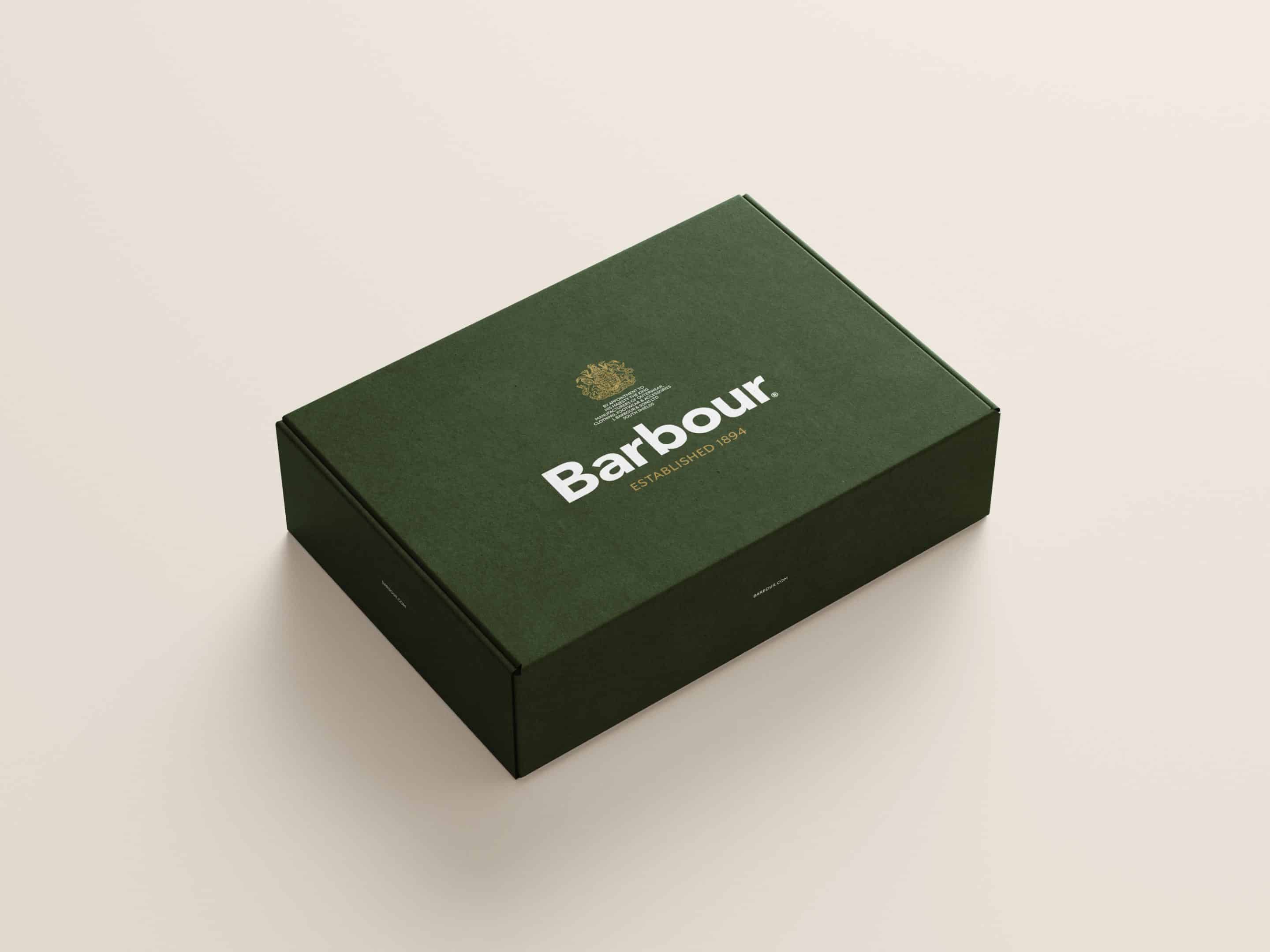
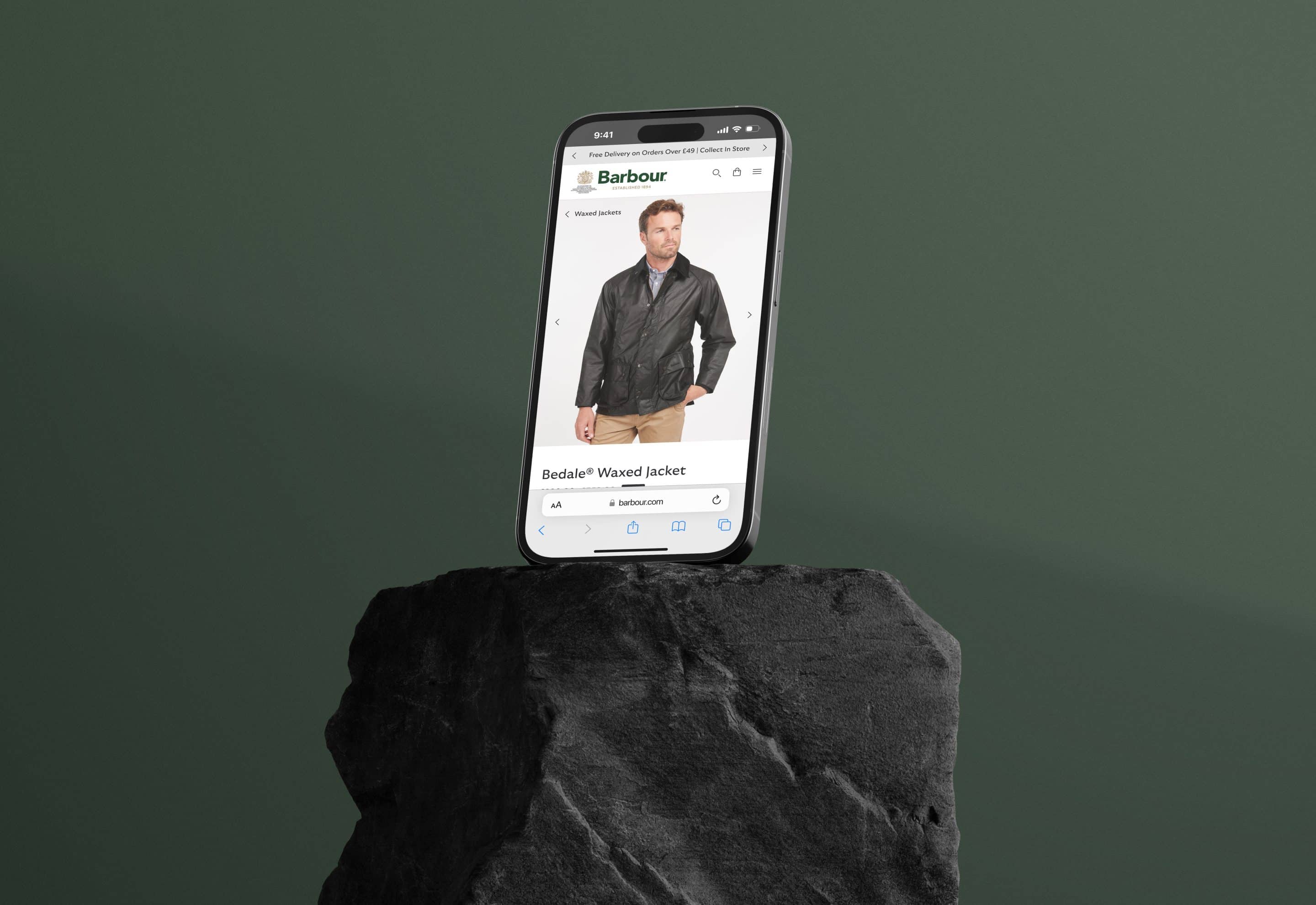
After several years, Jake returned to the North East and secured a role with fashion brand Barbour as a Senior Graphic Designer on its global creative services team. He said he was drawn to the brand because of its heritage and the way it continually evolves year after year. Speaking about his role, Jake said: “Our ongoing focus is on preparing the brand graphically and its communications for the upcoming years, covering both digital and physical channels with men’s and women’s collections worldwide.”
In his role, he creates assets for advertising campaigns, collaborations, retail stores, social media, product trims and packaging. “The range of projects is really broad, keeping us well-rounded as designers while giving us the freedom to develop our own strengths,” he said. More recently, he’s been involved in developing the AW26 collection and campaign assets, which launch in mid-September.
When asked what advice he would give to students aspiring to work for a brand like Barbour, Jake responded: “Though I never studied fashion, I continuously worked on developing and broadening my skills. This strategy has proven advantageous, as I can always identify gaps or bring a fresh creative perspective to a major brand”. Speaking about portfolios, he added: “PDF format is fine – but don’t make it 80 pages long. If you have 10 projects you like, show the best 5; always audit and edit your portfolio for each role. Those hiring expect an easy-to-navigate portfolio format, especially when we receive hundreds. Throw in a wild card project too; we like to be surprised”
He also encouraged students to focus on the quality of their online presence rather than the size of their audience. “For social media, followers don’t really matter. It’s more about the content. Show and share your process even if it feels weird to. We want to see the person in their work, a flair or spark of what makes them who they are. Also, if your content lets us learn something new, you’re doing something right.”
Reflecting on starting in the industry, Jake said: “Don’t be shy and don’t wait for opportunities. Most of the projects I’m proud of came from conversations with people who share the same passion or interest; you’ll be surprised by who’s out there and how much your creativity can make a difference to them. Also, don’t work for free.”
Finally, reflecting on his own journey, Jake said: “When I entered the creative industry, producing high-quality creative work at scale was a task handled exclusively by skilled professionals. Today, rapid technological advances and a competitive economy have transformed the landscape. Now, anyone with access to generative tools can contribute, affecting art, design, and the bottom line. Although creative talent remains vital across nearly every sector, now is the time to become better storytellers. My simple advice is to aim to create something that stirs emotion. In a world where technology can generate almost anything, human emotion, perspective, and connection are what make creative work impactful. Make it real.”
If you are a school leaver looking to study graphic or digital design at college level make sure you check out our diploma. On this course student’s work on a variety of projects, including live briefs with real clients, with the opportunity to collaborate with a wide range of industry contacts for projects, workshops, talks and studio visits. Find out more here.